Thursday, May 7, 2015

4 Reasons why "American History X" isn't as good as I remember

4 Reasons why “American History X” isn’t as good as I remember
By: Brian Cotnoir
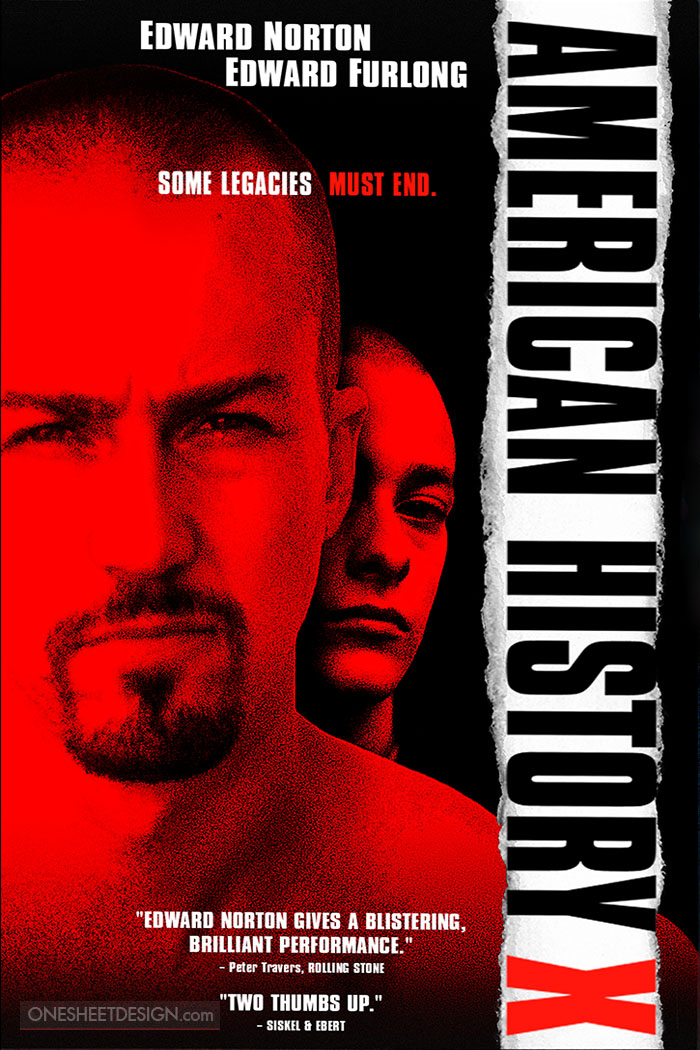
Isn’t it strange how something you once really liked loses some of its luster over time?  For me, personally, this is most true when it comes to film.  Films I once thought were great when I was kid, now seem to have more plot holes and issues then I remember.  That doesn’t mean I stopped liking some films just because they’re not as good as I remember it just means I look at them in a whole different perspective. My biggest epiphany to this rule came after recently re-watching one of my favorite films “American History X”.  Man, oh, man do I like this movie.  Ever since I saw it for the first time in High School it has become one of my favorite films.  I’ve seen it dozens of times, and it was my favorite film up until a couple of years ago.  I made every person I knew watch this film if they hadn’t seen it, and I was pleased that a majority of the people I showed it too enjoyed it as much as I did. However, that was in High School.  I’m now a 25-year-old adult, and my taste in films has greatly changed.  All though, I still enjoy “American History X”, I will admit that this film has some flaws that I failed to recognize years ago.  So here are my 4 Reasons why “American History X” isn’t as good as I remember.   

1.) You don’t feel bad for any of the victims

     So Derek Vinyard—one of the Main Characters in the film—goes to prison for murdering two black gang members who were trying to steal his car.  He shoots one to death in his driveway, and the other he seriously wounds, before dragging him to the sidewalk and stomping his skull in.  This is one of the most gruesome kills I’ve ever seen in film, and yet I never felt sorry for the guys that Derek killed in the film.  If I caught two guys trying to break into my car I would be absolutely furious...maybe not furious enough to murder them, but I certainly would beat the hell out of them (at least until I felt they had bled enough).  Now, yes, Derek’s actions in the film were still racially motivated and horrible no matter how you look at it, but I still feel the screenwriter for the film David McKenna could have written the victims as more human and innocent, which leads me into my next point…

2.) It glorifies Neo-Nazi’s
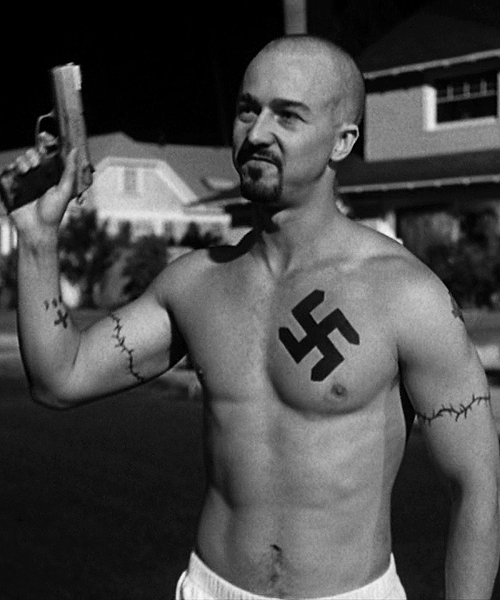
Ultimately this film is about Derek’s redemption and his transformation from Neo-Nazi gang leader to upstanding citizen who tries to dissuade his younger brother from following the same path.  However, it does—somewhat—glorify Neo-Nazi’s.  Derek’s younger brother Danny recounts a time at a local basketball court where Derek and his Neo-Nazi gang members had a run-in with the two black men that Derek would later kill.  They get into an argument at the basketball court where they both exchange heated racial slurs.  Derek makes an agreement with one of the men (who always reminded me of Buggin’ Out from Spike Lee’s “Do the Right Thing”) that whoever loses a pick-up basketball game on the court is never allowed to play or show up there ever again.  Derek leads his team to a triumphant come from behind victory, thus making Derek and his gang looks more glorious than ever.  And again, because the men that Derek and his team beat in the game are portrayed as a group Angry Black Thugs, it gives some people who are watching the film that Derek and his crew might be anti-heroes instead of regular villains.

3.) Why wasn’t Dr. Sweeney looking out for Danny, when he was trying to help Derek

Dr. Bob Sweeney was Derek’s High School English Teacher; he is now Danny’s High School Principal—and acting History Teacher.  Shortly after Derek is brutally sexually assaulted in the prison shower his former gang members Derek is visited in the Prison hospital by Dr. Sweeney.  Derek pleads with his former educator and mentor to help him become paroled.  Dr. Sweeney agrees to help Derek, and he informs Derek that his younger brother Danny has heading down a similar path. So Question:  If Dr. Sweeney is helping Derek—an imprisoned Neo-Nazi—get paroled, why doesn’t he help Danny to make sure the same thing doesn’t happen to him.  I mean, it’s not like Dr. Sweeney and the Vinyard brothers are total strangers who just met.  They know each other.  Hell, Dr. Sweeney sees Danny practically every day at school.  You can’t tell me that Derek couldn’t have written a note and instructed Dr. Sweeney to give it to Danny.  Now, there’s a part in the film where Danny explains that Derek told his family not to visit him in prison, and if they showed up he wouldn’t see them anyways, but seriously Derek couldn’t make an exception?  He could’ve told his family to come visit him, and that way Derek, Danny, and Dr. Sweeney could have a conference to show Danny what could happen to him if he didn’t leave the Neo-Nazi gang?  Plus—and I’m just speaking out loud as a realist—there was no guarantee that Derek would get paroled for his crimes, so why couldn’t Dr. Sweeney have put just as much effort in to making sure Danny didn’t fall down the same path?  Which brings me to my final point...

4.) Danny doesn’t get to show what he learned, and ergo he learns nothing!

SPOILERS: If you haven’t seen the movie and want to you may want to 
skip this part


Derek has a heart-to-heart conversation with Danny where he tells him the story of what happened after he entered prison.  He tells him of all the hardships and the assaults he endured and how frightened for his life he was in prison.  He tells him how he learned to change his ways—with some help from Dr. Sweeney and a black prisoner he worked with named Lamont—and how he doesn’t want to see his younger brother go through the same hell.  So Derek convinces Danny to change his ways, and the next morning he is to go into school and turn in a paper that Dr. Sweeney assigned to him about what he learned from Derek’s incarceration.  However, Danny doesn’t ever get to show his paper to Dr. Sweeney because he was shot to death in the bathroom by a black gang member that he had a run-in with the day before.  You could possibly argue that it is—somewhat—poetic justice, but yeah, since Danny’s now dead, he has officially learned nothing!  It’s also true that not every film needs to have a happy ending, but after sitting through this entire film where all these people trying to get Danny to change, it almost feels like it was all for nothing. 

Wednesday, April 8, 2015

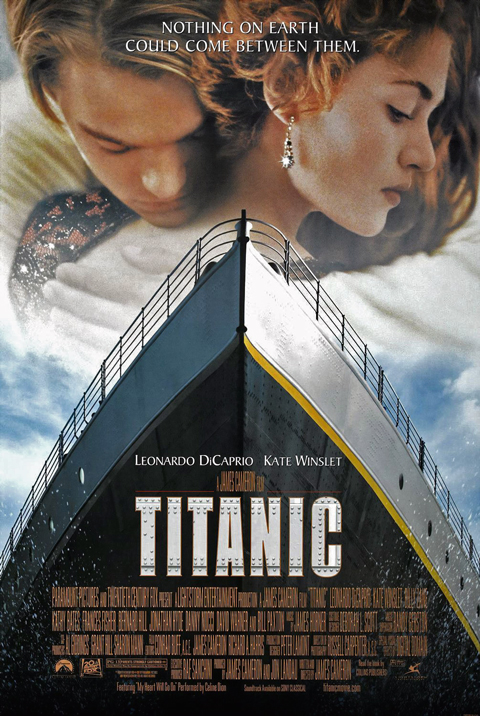
When "Titanic" Ruled the World

When “Titanic” Ruled the World

By: Brian Cotnoir


     Every generation has at least one landmark film that becomes so popular that it changes the industry entirely.  Films like “Gone With the Wind”, “The Wizard of Oz”, “Psycho”, “Jaws”, and “Jurassic Park” are all considered to be films that changed the industry, and were so popular that people lined up around the blocks to see them again and again.  Another one of those Blockbuster Films is the film I’m going to talk about today, James Cameron’s 1997 film “Titanic”. 
What is it about “Titanic” that is so special?  James Cameron wasn’t the first director to write and tell a story about the sinking of the RMS Titanic in 1912:  In fact, there were 3 silent films released about the sinking of the Titanic the year it sank!  Cameron is actually the 8th Director to make a film about the Titanic.  In 1943 the Nazi’s released a highly fictionalized propaganda film called “Titanic”.  Ten years later, in 1953, there was an American film released called “Titanic”, and only 5 years later in 1958 there would be another film about the sinking of the Titanic called “A Night to Remember”.  There was even an IMAX Documentary (nominated by the late Leonard Nimoy) called “Titanica” that was released 2 years before James Cameron’s “Titanic” was released in theatres.  So again I ask: what makes James Cameron’s “Titanic” so special?  Well there a few things that stand out in my mind about what makes this film so special.        
Yeah, we a part of the "Framing Device"
              For one thing, “Titanic” (1997) was—in my opinion—the last true Great American Blockbuster.  In this High Tech day and age, we have a greater access and knowledge about upcoming films than ever before.  There was no Netflix, no Youtube, and no Social Networking at the time, and the idea of illegally downloading a movie onto your computer wasn’t even a possibility at the time.  If you wanted to see a brand new movie you’d either have to wait until it was out in theatres, or you’d have to what until it released on VHS and either buy your own copy of it, or rent it from your local video rental store.  I was 8-years-old when “Titanic”, and it believe me it was a big deal.  My mother and grandmother tried to take me and my older sister to see it in theatres when it was released and it was impossible!  I remember every time they’d drive us to the theatres the line to see the movie would be out the door, and then we’d go inside only to find out that all the showings for that day had been sold out (and movie ticket services like Fandango would not exist for another 3 years).  So every time we’d go to the theatres, we’d either go home, or we’d see something else that wasn’t sold out like “MouseHunt” or “Mr. Magoo”.  To this day, I have never seen a film so popular that it was that difficult to see it in a regular theatre because it was always sold out!  Actually, that’s not entirely true; I did get to see “Titanic” in theatres when it was re-released in 3-D in 2012 for the 100th Anniversary of the sinking of the RMS Titanic.    
    The first time I got to see “Titanic” was when it was released on VHS, and my grandmother bought a copy of it (Again, technology was just on the verge of changing.  DVD’s came out in America 1997, but didn’t gain popularity or favoritism over VHS until years later.  The thing I remember the most about the VHS release was that it actually came with 2 VHS cassettes.  I remember as a kid thinking that was crazy because I had never seen a movie that was so long that it needed two VHS cassettes to play.  I watched it with my older sister, and thought it was amazing, and you know what: so did the rest of the world too.         
     At the time of its release there was a lot of skepticism over the film.  At the time it was the most expensive film ever made (costing over 200 million dollars!)  Many believed that the film would be a massive flop, and was possibly going to bankrupt multiple film studios.  However, the exact opposite took place.  It was beloved by critics and audiences alike.  It not only made back its massive budget, but went on to be the first film to gross over 1-billion dollars at the box office, and was the Highest Grossing film of All-Time (until it was surpassed by “Avatar” another film made by James Cameron).  Titanic was nominated for 14 Oscar, and Won a record-tying 11 awards including Best Director and Best Picture.  Oh, and that was just the start.                     
The Face that made Millions of Girls lose their G.D. Minds!
     Upon its release “Titanic” made a star out over actor Leonardo DiCaprio.  Leo-Mania was an insane time for everyone who lived through it.  Leonardo DiCaprio was on the cover of every teen magazine, and he made scores of young girls and women scream!  Every girl wanted to be with him, and every guy in the world—myself included—resented him.  I was so annoyed with Leo-Mania that I claimed I “hated” and “couldn’t stand!” Leonardo DiCaprio until I saw him in “The Aviator” for the first time...in 2008...11 years after “Titanic”.  That was a lot of jealousy and pent up rage I held towards him, and now he’s one of my favorite actors.  So go figure, right?                    
She made a man out of many of us
Then there was the leading actress of the film, Kate Winslet.  She didn’t become as popular or beloved as Leo following “Titanic”, but was responsible for a cultural phenomenon of sorts.  Like I said, when this film was released everybody saw this film.  It didn’t matter if you were eight or eighty-eight, EVERYONE saw “Titanic” when it was released, and there is one scene particular that stood out in this film.  The scene where Kate Winslet’s character, Rose, asked Leo DiCaprio’s character, Jack, to draw her like “one of [his] French Girls”.  For a generation of young boys between the ages of 8-16—again, myself included—Kate Winslet was the first woman they ever saw naked, and by association bring many of us into manhood.  I remember being on the playground in the 3rd grade, and anytime a boy said that he finally saw “Titanic” all any of us could talk about was how we saw a girls boobies.  To us, it was the biggest deal ever.      
     The last thing, from “Titanic”, I’m going to talk about is the Theme song.  Originally, the film was going to be all orchestral and feature no actual singing, but somehow or another it was decided that the film would feature a song sang by Canadian singer, Celine Dion.  The name of that song: “My Heart Will Go On”.  There was a time in America where you could not go anywhere without hearing “My Heart Will Go On”, on the radio, at the mall, or from one of the millions of CD copies playing across the country.  Like all things from the movie “Titanic” the song was inescapable, and just like Leo-Mania, “My Heart Will Go On” began my deep resentment towards Celine Dion.  It is a resentment I still hold in my heart, and to this day, I still believe that there is a good chance Celine Dion is in fact the Anti-Christ.               

I'm still pretty sure that she might be the Anti-Christ
               
     As the 103rd Anniversary of the sinking of the RMS Titanic approaches, let us take a moment to reflect on how this tragic even led to a cultural phenomenon that changed film, music, pop culture, and indeed the entire world.  James Cameron’s masterpiece film “Titanic” is a remarkable and landmark film, the likes of which I do not think will ever be seen again.

Thursday, March 26, 2015

Disney: Culturally Significant or Racist

Disney: Culturally Significant or Racist
By: Olivia Slaughter

Growing up, dress up was a rite of passage.  My cousin Jessica and I would look through my Aunt’s vast wardrobe and make incredible costumes out of the clothes we would find.  Princesses because a frequently played game between the two of us.  Long gowns, ridiculous amounts of makeup, and furs made us feel like true royalty.. All was well until I began to get older.  Around age eight or nine, I remember watching Disney movies and realizing that no one I saw in these films looked like me.  I remember trying hard to fit into small chairs and tables and daintily eat and drink my make pretend food. I remember being filled with anger when I could not sing, dance, or gracefully walk around like a princess dress up became more of a chore than fun when I realized I would never look like the princess I tried so hard to emulate for so long.   For a long time I have been wondering, why it would be so hard for Disney to produce characters that look like their viewers. I finally decided to try and figure it out; the information I found was unsettling.
Uncle Remus from "Song of the South"
To make sense of this it is best to start at the beginning. Walt Disney began working as an animator in 1923.  His first film Steamboat Willie went over phenomenally and his career began to pick up steam. (biography.com)His early cartoons were riddled with racial caricatures and stereotypes.  His first film featuring people was “ Song of the South,” featured a tired old stereotype of a black man taking care of young children with a grin glued on his face and with many quotes about him being , “just happy to be alive.” (Disney, Song of the South) Uncle Remus spoke in poor African American Vernacular also referred too as AAVE. (Stanford.edu)  We also see him put Mickey Mouse in blackface and he even uses a “piccaninny” trope in the film Fantasia as a slave to a white centaur. (Disney, Fantasia)   He also worked on Nazi Propaganda films such as “ Death for Education”.  Here is the thing,  no matter what you want to say about Disney, this was pretty much the social norm at the time.  He was a white man , with money living in the 1920s.  This was pre civil rights movement.  He was most likely making films that sold to the people that could afford him. Was it ethically right?   Not by todays standards.  I think Disney operated on Cultural Ethical Relativism and it helped skyrocket his name and business.
King Louie from "The Jungle Book"
       Throughout the early works Disney included many stereotypes and racist characters throughout his stories.  “The Jungle Book” is the first Disney movie with a person of color as its lead character. While it was a step in the direction of integrating Disney, it had many flaws. One flaw was that all of the apes from the movie were played by black men with soulful voices. The song “I  Want to Be Like You “ is a racist tale of turning apes into men.  It is a very obvious metaphor for black people trying to emulate white people at that time.  The whole scene has a very minstrel feel too it.(dailycaller.com)                                                                     
Jim Crow from "Dumbo"
Another example would be the crows from Dumbo. Walt Disney even went to the lengths of naming the leader of the flock of drunkard crows , Jim Crow. Dumbo also has a song  called “ The Song of the Roustabouts.”  The song is sung by faceless, black workers who are diligently putting the circus together in the rain. One line of the song reads ,”  We work all day, we work all night, we never learned to read or write, we are happy hearted , roustabouts.” (lyricsbox.com)  Disney’s Cultural Ethical Egoism allows for this to be okay, in his world. What about now? Why do we continuously have the same faces and bodies in Disney movies and shows?

"The Song of Roustabouts" from "Dumbo"

  
Princess Jasmine from "Aladdin"
  In 1992, long after Walt Disney died,   Disney tried to do the right thing and introduce a brown princess, Jasmine. She was a princess of an Arabian country with the imaginary name of Agrabah.   The film starts off as problematic from the beginning with the opening song saying that,” They will cut off your ear if they don’t like your face, barbaric, but hey, its home.” This gives the illusion that people from Arabian countries are violent. Another problematic moment would be sexualizing Jasmine as a young woman. She wears very little clothes and is not even period correct or correct in what would most likely have been a Muslim country.  The plot is that she flees from her overprotective father and is saved in a busy market by a peasant boy named Aladdin. Aladdin is a peasant whose skin gets lighter and lighter throughout the film as he becomes wealthier. Jafar the villain has a stereotypical Arabian face and exaggerated features and a thick accent. Everyone else in the film has a British or American accent. The film has the typical princess/prince plot and really was not revolutionary at all in hindsight.  With “Aladdin” coming in at number 4 on “Disney’s Highest Grossing Princess Films”, the only three movies ahead of it are white princess staring movies. (thefiscaltimes.com)
      Disney was held to a standard and it worked. White Disney princesses, as damsels of distress, with impeccably thin figures, and voices of angels became their normal.  Men with large chests, dreamy eyes, great hair, and noble steads always saved the day from villainous women.   Women were seen has prizes and held to incredible standards. If they wanted a man they either had to sacrifice it all, Ariel, Sleeping Beauty, Pocahontas, just to name a few.  It was not until Brave was introduced in 2012 that we see a girl who is her own hero.  (imbd.com) The women in Disney films tend to be dangerously altruistic. They risk, the things they love and even limbs, voices and opportunities in order to make everyone else happy.
Lilo & Stitch
     One of the best things about Disney is their ability to teach lessons through song and story.  “Lilo and Stich” (imdb.com) was a terrific movies about a Hawaiian family who comes in contact with a space alien. They love each other intensely and eventually risk it all to remain a family. There is a long history of Disney making us feel good and almost magical after hearing, watching, or reading one of the many stories we have grown up with.  From Disney we also learn that anyone can have a happy ending and can overcome many obstacles.  It also teaches that love knows no bounds.
         Disney is a big name. The Disney Company owns seven media networks, 277 radio stations, eleven theme parks, eight television stations, seven print companies, eight studios, three different consumer product sources, and Disney Interactive.  (thewaltdisneycompany.com) My original reaction to that was shock and awe, but the more I thought about it the less I was surprised. We are a consumer market who eats up pretty much anything that is thrown at us.  We see the same news stories on multiple outlets, shows with similar titles and premises, and families from different shows that look so similar you could just swap them out.  If something is shown to us once, and we enjoy it is easier to pick it back up again and I think that is what happens in this instance.  I believe what makes Disney “okay” now, is the Cultural Ethical Relativism.  Their standards are changing as time progresses. We are getting varied stories, and varied people and creatures and voices.
  • Works Cited
  • Aladdin. Dir. John Musker and Ron Clements. Prod. John Musker and Ron Clements. By John Musker, Ron Clements, Alan Menken, Howard Ashman, Tim Rice, Scott Weinger, Robin Williams, and Linda Larkin. Buena Vista Pictures Distribution, Inc., 1992.
  • Bio.com. A&E Networks Television, n.d. Web. 07 Dec. 2014.
  • Brave. Disney, 2012. Film.
  • "Disney Interactive | The Walt Disney Company." Disney Interactive | The Walt Disney Company. N.p., n.d. Web. 07 Dec. 2014.
  • IMDb. IMDb.com, n.d. Web. 07 Dec. 2014.
  • Jungle Book. National Film and Video Center, 1942. Film.
  • Lilo & Stitch. Buena Vista, 2004. Film.
  • N.p., n.d. Web.
  • Pocahontas. Dir. Mike Gabriel and Eric Goldberg. By Carl Binder, Susannah Grant, Philip LaZebnik, Irene Bedard, Judy Kuhn, Mel Gibson, and David Ogden Stiers. Buena Vista Pictures Distribution, Inc., 1995. Laser disc.
  • Song of the South. Prod. Walt Disney. 1946. Film.
  • "The Top 10 Disney Princesses at the Box Office." The Fiscal Times. N.p., n.d. Web. 07 Dec. 2014.
  • Veraketta, GEorgia. "The Representations of Gender, Sexuality and Race in Disney's The Lion King." Academia.edu. N.p., n.d. Web. 07 Dec. 2014.
  • "Who Owns the Media?" Free Press. N.p., n.d. Web. 06 Dec. 2014.
  • Pullum, Geoffrey K. African American Vernacular English Is Not Standard English with Mistakes (n.d.): n. pag. Web.
  •  
5 Important Lessons we've learned from watching Disney Films

Saturday, March 21, 2015

My 5 Most Overrated Films of All-Time

The 5 Most Overrated Films of All-Time

By: Brian Cotnoir

     It’s common knowledge that there are a ton of overrated films released every year.  Every year film studios invest a lot of time and money, not only in just making the film, but also a lot goes into advertising & promoting the film, and trying to convince people that they want to see it when it gets released in theatres, and every year those same studios trick us into spending our money to see an over-hyped and overrated movie.  Now let me be clear about what I mean by “overrated”.  I’m not talking about a film that was hated by critics and audiences that still made a ton of money at the Box Office, because let’s be realistic: nobody thinks that “Twilight” or Michael Bay’s “Transformers” films are cinematic masterpieces; they just got lucky and made a ton of money.  No, I am talking about the films that are regarded as “Landmark films” and “works of art” and are still beloved and praised by critics and audiences despite having almost no redeeming qualities.  These are my Top 5 Most Overrated Films of All-Time.

5.) The Matrix

I saw this film for the first time when I was 11 or 12-years-old at a friend house.  I remember thinking the groundbreaking effects were really good, and I also remember not having a clue as what the story was about.  I watched the film again as an adult and I’m still confused as to what “The Matrix” is about.  This has been a film I’ve never been able to get excited about or into.  I don’t care for it at all, or any of its sequels (though I will admit that I do think “The Animatrix” is a nice Anthology/Sci-Fi/Action film).  As for the live action “Matrix” movies...well, I can appreciate them for their groundbreaking CGI work, but that’s about it.  For me the story is too nonsensical: seriously, why the hell do they need the Matrix?  What is the point of the Matrix?  If a film leaves you with more questions than answers, then you have a serious problem.

4.)  Alice in Wonderland (1951)

I know a lot of people who love this film, but hey even a great studio like Disney has its misses.  Now true, there are worst films that have been put out by Disney, but their 1951 animated adaptation of Lewis Caroll’s Alice’s Adventures in Wonderland is still overrated.  The film for one thing has a short run-time for an animated film (only 75 minutes). The songs from the film are also mediocre and forgettable...wow, that’s bad, when a Disney film has songs that nobody remembers.  Then you look at the title character of the film, Alice. Alice is one of the weaker Disney Heroine’s in my opinion.  At the beginning of the film she tells her sister how she wishes the world to be weird and different, and then she follows the White Rabbit down the hole into Wonderland—a world where everything whacky and bizarre happens—and what does she do?  Complain about how weird and bizarre everything is, and tries to make sense of a world where there is none!  You know what; screw you Alice!  You got EXACTLY what you wished for, and then you have the audacity to complain about it!  I’m sorry you are not a great character!  Oh, and the 2010 remake of “Alice in Wonderland” that Tim Burton did for Disney didn’t do this film any favors.  Maybe someday a film studio will make a decent film adaptation of Alice’s Adventures in Wonderland, but until then we’ll just have to put up with this mediocrity.

3.) E.T.

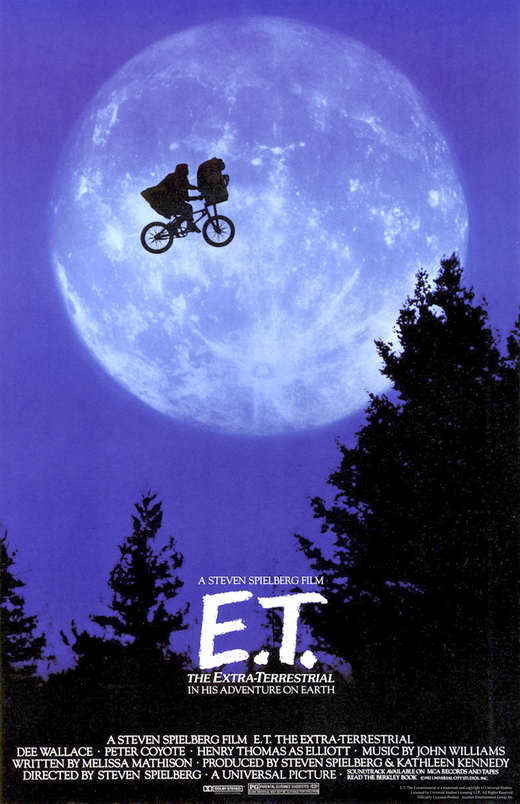
A Timeless Classic enjoyed by Audiences of All Ages?  I don’t think so.  Sure Stephen Spielberg may be the Greatest Film Director of All-Time, but that doesn’t mean everything he does is fantastic.  Even his worst film is still good at best, but when you really look at his works, and compare “E.T” to his works like “Jaws”, “Jurassic Park”, and “Schindler’s List”, yeah “E.T.” just doesn’t look that good.  I thought this film was okay, when I was a kid, but as an adult I see it as a boring kid’s story.  I find the character E.T. to be more annoying than fun, interesting, or charming.  What you think just because Elliot and E.T. had a magical bond, where they could feel each other’s joy, pain, and other emotions makes it a heartfelt classic?  You do realize that E.T. and Elliot’s bond is pretty much the same thing as “The Care Bears”, right?  Yeah, that little spark of wonder and awe this film once gave you, just burnt out now didn’t it?

2.) Vertigo

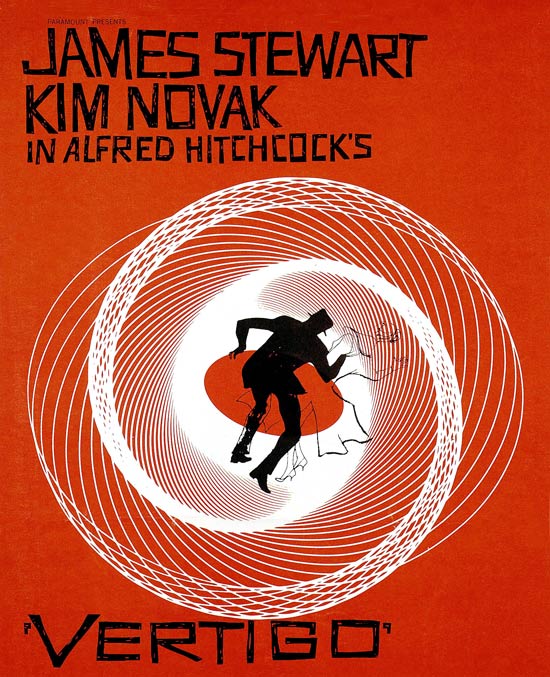
A few years back, I read an article saying that the American Film Institute was considering updating it’s 100 Greatest Films List, and that Alfred Hitchcock’s “Vertigo” was rumored to replace Orson Welles “Citizen Kane” in the number one spot.  Upon hearing this news I, along with a group of friends, sought out a copy of “Vertigo” to watch because none of us had ever seen it before.  After watching it, we all stared at one another with looks of confusion.  How the hell could this film possibly be considered the Greatest Film Ever Made?  I’m not saying, “Vertigo” was a bad film, but I think it’s a far cry from being the “Best Film Ever Made”.  I am a huge fan of Hitchcock, but he’s made better films than “Vertigo”.

1.) Free Willy


Every kid in the 1990’s has seen this film at least once, and everybody still remembers that iconic scene from the film of the whale jumping over the main character Jesse (I mean it’s on the G.D. Movie Poster for crying out loud), and of course everybody remembers the song “Will You Be There” that was performed by the Late & Great Michael Jackson...and that’s about it.  Other than that nobody remembers anything about the movie “Free Willy”.  It’s fairly amusing to look back at this film: it was made during a simpler time—in Pre-9/11 America—when the World’s Biggest Problems were totally mundane (I.E. Save the Whales).  Even when I was a kid, I didn’t like “Free Willy”.  There is nothing redeeming about “Free Willy”.  If your kids want to see whales perform, then you should take them to see the whales at Sea World or an Aquarium!  How they managed to make films based on this story is beyond me, because it is a dumb idea for a film, and it’s just a dumb film!

Friday, February 27, 2015

Bargain Bin Reviews: "The Adventures of Scamper the Penguin"

Bargain Bin Reviews: The Adventures of Scamper the Penguin

By: Brian Cotnoir


     Hello all welcome to the first posting of a new series here on “Asylum for Nerds” called Bargain Bin Reviews.  What I will essentially be doing here is taking a look at obscure and/or foreign straight to video/DVD animated films (mostly made for children).  For the First Edition of this New Series, I chose to review “The Adventures of Scamper the Penguin”, which isn’t the original name of the film.  This film was a joint collaboration between Japanese and Soviet Union film studios in 1986 called “The Adventures of Small Penguin Lolo”.  Now for the American English release they changed a few things around like the characters names, and edited out a few scenes in order to make the film more “Family Friendly” and they gave us this pile of garbage.                                    
Aren't you two adorable.  You'll fry up nice for dinner tonight
The film is the story of a little penguin chick named Scamper, whose always scampering around and unintentionally getting into mischief (hence why he was given the name Scamper).  Scamper’s family is always telling him not to wander off, but he does anyway, and one day he and his best friend Snowflake, and they get washed out to sea.  While floating out at sea they are captured by a group of Russian poachers who are planning to sell them to a zoo.  Now Scamper, along with Snowflake, and a Macaroni Penguin named Louie have to find a way to escape and return home to their families before the poachers can sell them to a zoo.                       
So yeah this movie is definitely intended for a very young audience.  I’d this is an ideal film for anyone under the age of seven.  However, if you’re like me (and way over that age) you’re going to notice a lot of flaws with this film.  First of all there is enough cutesy, whimsy, magical awe that if this film were any sweeter, it would give us all diabetes!  The songs are moronic and idiotic! The songs are pretty much just singing about everything that’s happening on screen.  With lines like “they walk with a waddle/and are shaped like a bottle/they really look absurd”!  It’s almost like if Alan Menken huffed paint-thinner for 3 day straight and then said, “I’m going to write a song like Randy Newman”.  That’s how bad the songs are!  And the dialogue isn’t much better; not only does it sound like it was written for 6-year-olds, but it also sound like it was written by 6-year-olds.  All the characters do in the film is state the obvious and ask obvious questions.  Even the narrator is just describing what’s happening in the scene.  It’s almost like they don’t want you to have to think or ask questions! 
    The characters are all stupid.  Again, they’re all very playful and cutesy to the point of nausea, but also the American voice actors all sound alike.  Almost as if it were 3-4 people doing the voices of every character, a quick search of IMDB shows that most of the cast had no voice acting experience before this, and only a couple of them did anything after.           
    As for the animation, I was surprised at how decent it was considering it was made towards the end of the Soviet Union, when I’m sure they had almost no money.  The animation was very clean and the movements of the characters weren’t choppy at all.  The animation is actually the only positive thing I have to say about this film.                                                    
    So on a scale of 1-to-10, I’d give “The Adventures of Scamper the Penguin” a 3.  The songs are bad, the dialogues, bad, and the main characters just make you want to throw up.  If you have a child who’s under the age of 7, they’ll probably like this film, any one older than that, will probably think it’s babyish and boring.     
    I hope you all are excited about this new segment as I am, and be sure to join us next time on “Bargain Bin Reviews” when I will be reviewing a childhood favorite of mine: “Bigfoot and the Muscle Machines”.

In case you're curious as to how bad "Scamper" really is

Monday, January 26, 2015

5 "How the Hell was that a Hit?" Songs (PT. I)

5 "How the Hell was that a Hit?” Songs (PT. I)

By: Brian Cotnoir

     With all the different genres and artists in music today, it’s safe to say that there are some pretty diverse tastes in music today.  Every year, thousands of songs get released to the general public: some become popular hits, some get ignored and fade into obscurity, and then there are those songs that become hits that some people love, but other people seem to hate.  The songs aren’t necessarily bad, but when you look back at them you say to yourself, “You know, this wasn’t even that good of a song”.  So today we are listing 5 songs that make people say “How the Hell was that a Hit?” songs.  The songs are listed in no particular order, so enjoy

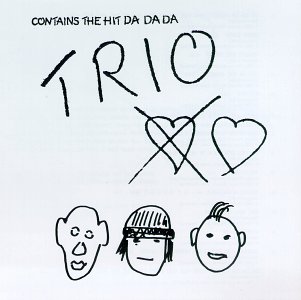
1.) Da Da Da by Trio

In 1982, German New Wave Band Trio released the track “Da Da Da” and it became a hit in Europe and even broke the Top 40 on the U.S. Billboard charts (peaking at #33). The song lyrics and the way the song is sung sound like the bands singer Stephan Remmler is on a date with a really uninteresting woman.  Thoughout the song you can hear Remmler saying “Uh-huh” followed by a long pause and then “Uh-Huh” again.  Not only that but the guitar riff in the song is just a slowed down version of “La Bamba”.  “Da Da Da” was the only U.S. hit for Trio, and it has been used in television commercials most notably for Volkswagen.


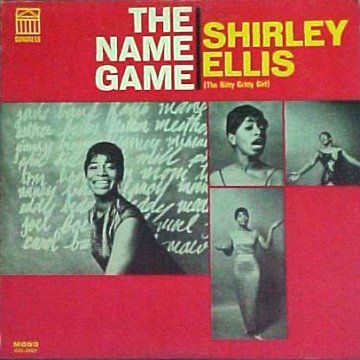
2.) The Name Game by Shirley Ellis

This track has had a bit of a resurgence since it was performed on the popular American Television Series “American Horror Story: Asylum”, but back in 1964 this song hit #3 on the Billboard Hot 100 Charts.  However, in Retrospect this is a childish song!  I’ll be honest, I did not know this was an actual song recorded by an actual singer to be played on the radio, the reason why is because I always remember singing this song in pre-school and I also remember Elmira Duff singing it in an episode of “Tiny Toon Adventures”.  I always thought that it was written for a children’s music CD by some unknown singer-songwriter because it is a song that is completely childish. I have no idea how the hell “The Name Game” became so popular.


3.) Believe by Cher

I know Cher is one of the Most Popular and Successful Recording Artists of All-Time, but her 1998 #1 Hit song “Believe” is so overrated.  I know why people thought this song was so good because it was one of the first recorded song to ever use a new form of technology called “Auto-Tune”, and everyone was blown away by how it made Cher’s voice sound so different and unique, and everyone thought that Auto-Tune was going to revolutionize the music industry...And you know what, they were right!  Auto-Tune COMPLETLEY changed the music industry.  In fact, it changed the music industry, and we’re all sick of hearing Auto-Tune now because it gave talentless hack like T-Pain and Ke$ha music “careers”.  So thanks for ruining pop music Cher!  I hope you’re happy!


4.) Sunshine, Lollipops, and Rainbows by Lesley Gore

The first time I ever heard this song was on a TV show and I thought it was a joke/parody track because the lyrics were so corny and dumb!  Then learned the unfortunate truth that this was an actual song that was recorded with intentions of being as a non-novelty pop song AND it reached #13 on the Billboard Hot 100’s in 1965.  The song is sung by singer Lesley Gore (who is known more famously for singing “It’s My Party”) and was produced by Quincy Jones: the same man who Produced Michael Jackson’s “Thriller” and WON 27 GRAMMY AWARDS!  What the f*ck was going on in the 1960’s that made the world declare a desire to hear stupid hippie Bubble-Gum Pop tracks?


5.) Who Let the Dogs Out? By the Baha Men

Oi vey is this song a mess!  The shouting repetitive chorus from this cover song by the Baha Men “Who let the the dogs out?/ Who? Who? Who? Who?” made this track absolutely inescapable in the early 2000’s.  It was a song that was played at Sporting Events, TV Shows, and was even used in the “Rugrats in Paris” movie.  Most bizarre of all; “Who Let the Dogs Out?” won a Grammy for Best Dance Recording in 2001.  This song is a loud obnoxious mess, and if anyone dare let’s the dogs out around me then they are getting put down!


What did you think of this List?  Do you Agree?  Are there other songs you think should’ve been on this list?  Let me know in the comment section, and I will possibly include them on my Part II of this Countdown series.  

Thursday, December 18, 2014

5 Important Life Lessons we've learned from Watching Disney films

5 Important Life Lessons we’ve learned from Watching Disney films

By: Brian Cotnoir

You know, I must admit that I was quite resentful towards Disney for the longest time.  For the longest time I wrote them off as repetitive and overrated...Then I became an Uncle, and started watching Disney animated movies with my little niece, and then I began watching Disney movies on my own too, and next thing I knew I started writing Top 5’s about the Best & Worst Disney Characters on Asylum for Nerds.  So today I am going to tell you 5 Important Lessons that we’ve all learned from watching Disney films.

1.) Losing a Parent is tough, but time heals all wounds (especially if you have family and friends to help you through)

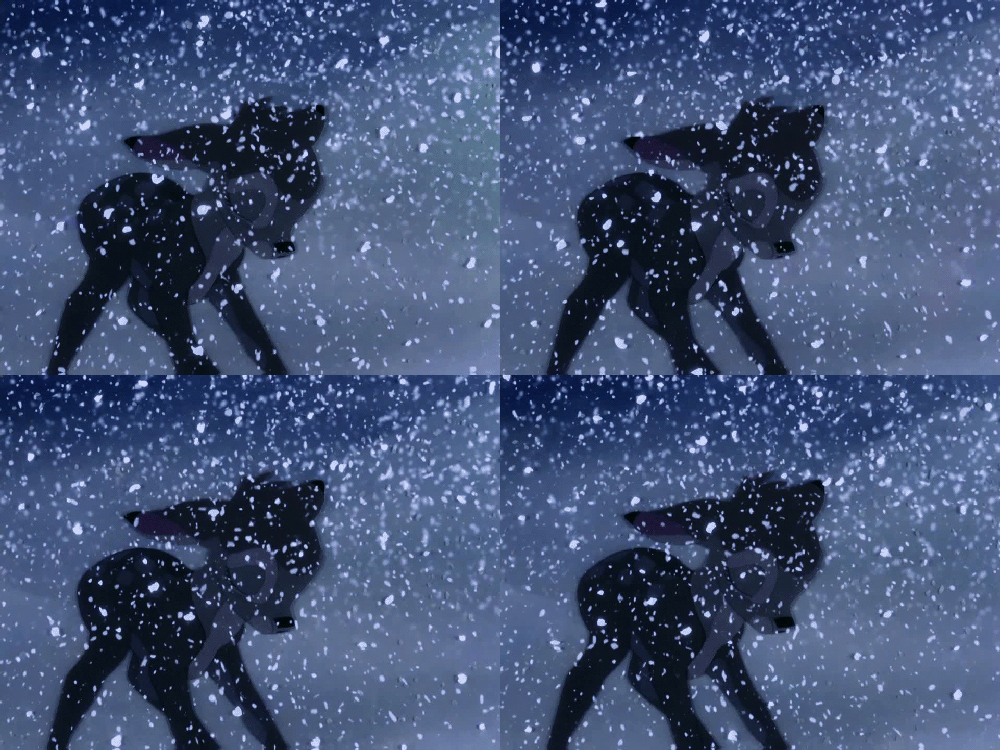
It's okay, Bambi.  You shall overcome
So many people claim that “Disney is anti-family”, because a number of their animated film stories that feature a death of one of or both parents.  That couldn’t be further from the truth.  I ask you to look at it this way:  growing up how many of your friends lived with both parents?  Off the top of my head I can only name 4 friends who parents didn’t get divorced when they were kids.  Now true, Disney parent absenteeism is more attributed to death than divorce or abandonment, but still losing a parent as scary know matter how you look at it.  Take Simba from “The Lion King” for example, he blames himself for the death of his father, and runs away from home and just wants to be left alone.  He is found by Timon and Pumbaa who take him under their wing and show him that life isn’t always easy and you can’t linger on the past, and they raise him like he was one of their own.  It’s a wonderful life lesson for kids going through tough times.

2.) Not all Monsters are bad.

Early on Disney studios had a very distinctive way of portraying characters.  The character design was as basic as you can get: you have the one young attractive character as the protagonist and then you have the older ugly character as the antagonist.  However, Disney has progressed over the years to show the “You can’t always judge a book by its cover” style, and it all started with the Beast from “Beauty and the Beast”; here you have a creature who is more creature than man as the love interest, while the villain is played by a muscular and  attractive Adonis, and yet Belle recognizes that the Beast truly has inner beauty and that Gaston is shallow and may be beautiful on the outside, but on the inside he is a hideous beast.  Then you have Quasimodo from “The Hunchback of Notre Dame” where so many characters make such a big deal out of his physical appearance, when it should be the content of his character that should matter.  Even their more recent films like “Wreck It Ralph” and “Monsters Inc.” have an emphasis that looks can be deceiving.  Just because a person looks scary or mean on the outside doesn’t mean that they are a bad person on the inside.  This is an important life lesson to learn at an early age, and every now and then it’s nice to have this helpful reminder.

3.) Parents, your kids are going to make mistakes and that’s okay

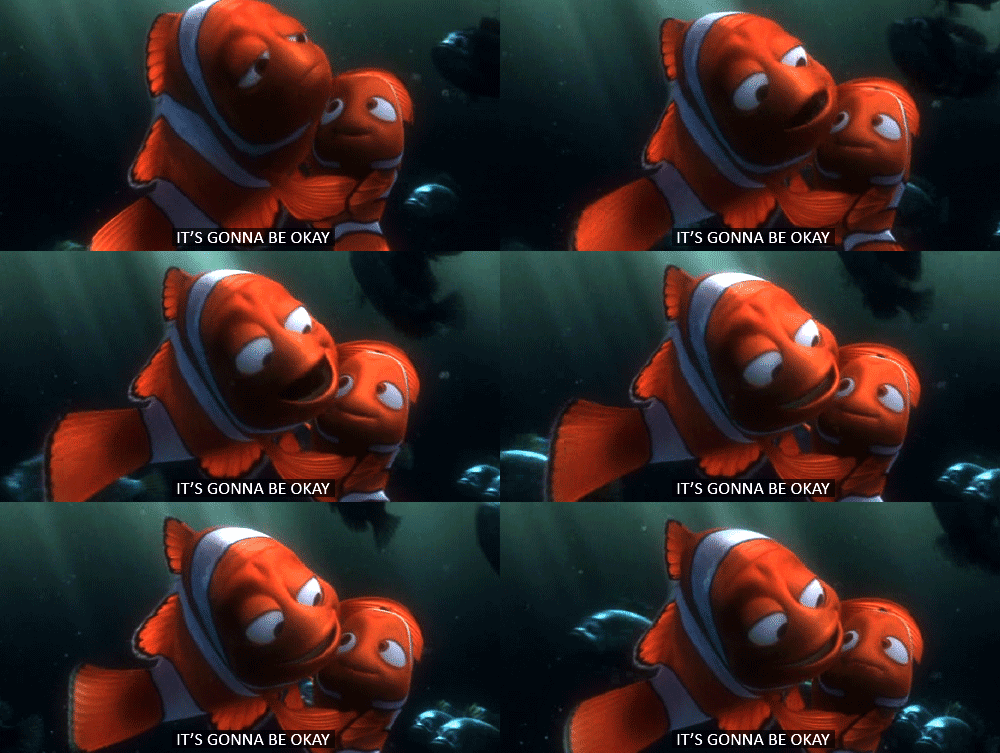
You said it, Marlon
How many Disney films are there out there where the main character is told by their parents, don’t journey far from here because the world is scary and dangerous? I mean this is a subject that is brought in films like “Pinocchio” “The Little Mermaid”, “Aladdin”, and “Finding Nemo”, just to name a few.  Then what typically happens is the main character wanders off on their own, they run into some trouble, and they have to turn back to their parents for help, the parents say “I tried to warn you”, but the main character decides to give it another try and with the help of their parents face the challenges head on and they overcome their fears together. This is an important life lesson for not only kids, but adults.  So many parents are so afraid to let their children grow up because they know of dangers in the world that their kids don’t, and they want to protect them and keep them away from danger and trouble.  However, whenever the parents do this all it does is cause their kids to feel anxious, repressed, and rebellious, and drives them to take big dangerous risks.  Princess Jasmine ran away because all she’s ever seen and known in life is the inside of a palace, and she wanted to see the World (and avoid being forced to marry a man she didn’t love)  And what about Nemo?  He wanted to get away from his overprotective father Marlon and explore the big, blue ocean, and he got in to trouble, but that’s not necessarily a bad thing because it teaches another—equally important lesson—; actions have consequences.

4.) The Importance of exploring

Weeeeeee, Adventures in books! :)
Another important life lesson taught from Disney is exploring?  What’s the point of life if you don’t get a chance to explore, I mean look at the songs in Disney Films about wanting to see the world and want more from life like “Part of your World” from “The Little Mermaid” and “The First Time in Forever” from “Frozen” are two of the most iconic Disney Songs about wanting to explore.  And everyone from Ariel, Belle, Jasmine, Princess Aurora, Rapunzel, and Princess Anna all expressed their desires to explore and see the world.  Life’s too short to stay cooped up in a palace for your entire life, so go out and see the world, and have adventures and make new friends.

5.) Life’s got you down?  Well then sing your freaking heart out! J

Are you upset because you feel like you let down your family and just want to be left alone to feel sorry for yourself?  Well there’s Disney a song for that...


Are you upset because you’re father wants you to be content with your life and forbids you from exploring??  Well there’s a Disney Song for that...


Have you ever been given a task to complete that seems utterly impossible?  Well there’s a Disney Song for that...


Have you ever felt like an outcast who will never find anyone who understands you?  Yes, there is a Disney Song for that too!


Disney is known for not only making some of the Best and Most Memorable films of All-Time, but they have also composed and performed some of the Best and Most Well Known songs of All-Time.  What person hasn’t taken Timon & Pumbaa’s “Hakuna Matata” philosophy to heart on those days where you just want to say f*ck it to everything?  And since 2013, there hasn’t been a woman between the age of 4-24 that hasn’t just randomly belted out that song for the hell of it!  This is probably the Best Advice Disney has ever given people; when life gets you down, don’t just sit there and sulk; get up, and sing your heart out until you feel better!