Saturday, August 24, 2013

Character Analysis: The Mad Hatter


Character Analysis: The Mad Hatter

By: Brian Cotnoir

The Mad Hatter from "Alice in Wonderland"
Few tales have the influence and longevity of Lewis Carroll’s “Alice in Wonderland”.  Since the story it was first published in 1865 “Alice’s Adventures in Wonderland” has gone on to entertain and inspire countless generations, and it makes sense.  With a bizarre story, in a bizarre setting, and characters who are just as bizarre, it’s should come as  surprise to know one that “Alice in Wonderland” has been adapted into many different mediums in television in films.  There have been animated adaptations, live action adaptations, musical adaptations, and a horror version.  Hell, in 1976 there was even a pornographic adaptation released called “Alice in Wonderland: An X-Rated Musical Comedy”.  So yeah, it’s a pretty popular story.  Of the many memorable characters, in Carroll’s classic tale, my favorite has to be the Mad Hatter.  Now like I said, there are many different adaptations, and a lot of different characters who played “The Mad Hatter” so save myself (and you the reader time) I’m only going to talk about the two Disney film versions of “The Mad Hatter”, but don’t worry I will talk briefly about some of the Mad Hatters from TV Mini-series and comic books as well.

CHARACTER: The Mad Hatter from “Alice in Wonderland” (1951) (2010).

     So the Mad Hatter is quite the unique and unusual character.  In both films Alice first encounters the Mad Hatter holding a tea party.  Why is he having a tea party?  Why Because it’s his Un-Birthday of course!  The Mad Hatter is joined by his two close friends the March Hare (sometimes referred to as “The Mad Hare” and the Dormouse.  He is a very neurotic and—dare I say—a hyper-active fellow.  He is sincere in his eccentric mannerisms.  He is a very gracious host who is forever trapped in a tea party that—seemingly—never ends.          
    Is he really “Mad” though?  Eccentric? Yes.  Unorthodox in his mannerisms? Yes.  Mad?  Very likely.  He appears to have the symptoms of a person who is “mad”, but he is only a danger to himself.  When we see him acting high-strung and even a little crazy he only appears to be putting himself in danger.  What I like the most about his character is that everyone around him seems to be asking him “Why?” (or more specifically “Why do you do that?) and his reply simply comes off as “Why Not?!”.  I’ve kind of discovered that philosophy in High School and it’s something that’s stuck with me all the way to adulthood.  When those ask “Why?”; You ask “Why not?!”. He is one of my favorite characters of all-time (without me even realizing it), but I mean it’s not like there’s pictures of me going around in Public dressed like the Mad Hatter...


Ahh Hell!

THE ACTOR(S):

     The Mad Hatter was voiced by actor Ed Wynn in the 1951 animated film and was played by actor Johnny Depp in the 2010 Live Action version.  Even though both men are playing the same character they both have their own distinctive differences.  
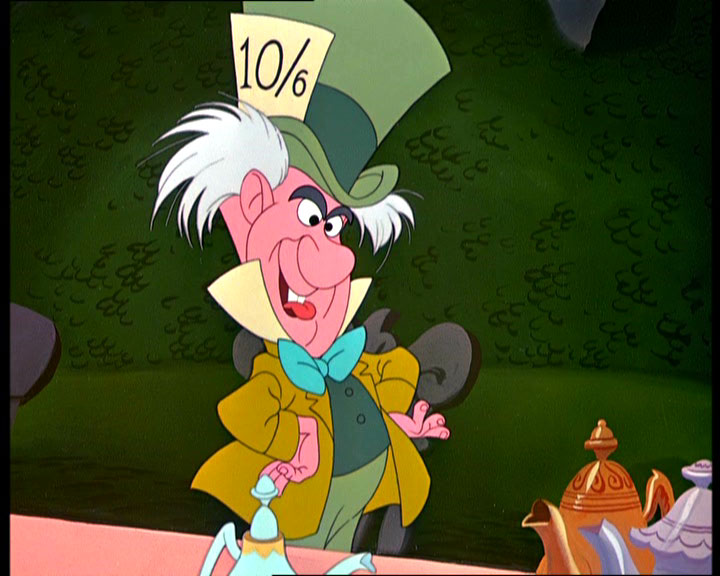
The Mad Hatter voiced by actor Ed Wynn, 1951
Wynn did not get a lot of screen time in the film.  The first time we see The Mad Hatter in the film it’s past the half-way mark and even then it’s only for a few minutes.  He also makes a brief reappearance towards the end of the film.  Wynn’s Mad Hatter comes off as more feminine than Mad.  His character has a slight lisp and he just appears to do things that are more weird, rather than crazy.  The craziest thing we see him do in the film is destroy the White Rabbit’s watch.  Wynn had a number of disadvantages as the Hatter.  For one, the running time of the film is only 75 minutes long.  That’s only one-and-a-quarter hours; very short for a “Feature Length” animated film. Also, the Mad Hatter was more of a secondary character.  The majority of the 1951 version focuses on Alice and terrible songs numbers.  I’ll be perfectly honest with you all.  I think that “Alice in Wonderland” is the worst soundtrack of all the Disney films.  None of the songs were that good or memorable, but I digress.         
Heeeeerrreesss....Johnny!
     Now, in the 2010 version directed by Tim Burton, the Mad Hatter plays a much larger role, and it’s obvious why; it had a much larger budget than the 1951 version, it had a very popular director, and he was played by freaking Johnny Depp—one of the Best and most loved actors of the last 30 years—of course he was going to have a large role in the film.  I mean, he’s on the freaking Movie Poster for crying out loud, and the film is called “Alice in Wonderland”, not “The Mad Hatter in Wonderland”.  So—you know—don’t you think Alice should be on the poster instead of the Mad Hatter?  The 2010 version was actually based off of the sequel to “Alice’s Adventures in Wonderland”, “Through the Looking Glass”, but like the story and the 1951 film version we have our first encounter with The Mad Hatter at a tea party with the March Hare.  Johnny Depp’s Mad Hatter is much taller than in the animated version.  His costume is also more outrageous and colorful, and he has a pale/painted face with outrageous orange hair and different colored eyes.  Also, Johnny Depp’s Mad Hatter has two different voices.  He has his regular speaking voice (that sounds very similar to when he played Willy Wonka in “Charlie and the Chocolate Factory”) and then when he’s talking about the past he has a Scottish accent, and to be honest with you all, I was really confused with when I saw it theatres because it came out of nowhere.  I remember thinking to myself the first time I heard Depp speaking in that Scottish accent; “Did Johnny Depp stop caring?”.  Later, I found out the different voices were done on purpose; though I have to be honest, I thought the Scottish accent was really stupid.


Oh, that Johnny Depp!

Character is similar to or Inspired by:
Jervis Tetch aka The Mad Hatter

Obviously, the character is inspired by Lewis Carroll’s literary works.  Not only that, but Lewis Carroll’s Mad Hatter character has gone one to inspire character’s in other shows, comic books, and entertainment mediums as well.  The Mad Hatter character has been transformed into a villain in the Batman Comic Book and Television series.  The Mad Matter Hatter in Batman is actually Jervis Tetch, a Scientist who creates many different devices to control people’s minds.  His costume is very similar to the Mad Hatter in Lewis Carroll’s books.  In recent years the Mad Hatter has garnered a bit of a cult-following amongst Batman fans.                    

The Mad Hatter has been portrayed by Sebastian Stan on the ABC Primetime Series Once Upon a Time.  Actor Andrew-Lee Potts played the character “Hatter” on the SyFy Mini-series “Alice”.  His characters sort of like a “Drug dealer of Human Emotions” and he is a very enjoyable interpretation of the Mad Hatter.  There are over a dozen other characters on Television series based off of “The Mad Hatter” from “Alice in Wonderland” and “Through the Looking Glass”.  Not only that, but musicians have also drawn inspiration from the Mad Hatter in their music videos.  Musicians such as Tom Petty and Dero Goi of Oomph! have both dressed up as the Mad Hatter in some of their music videos.
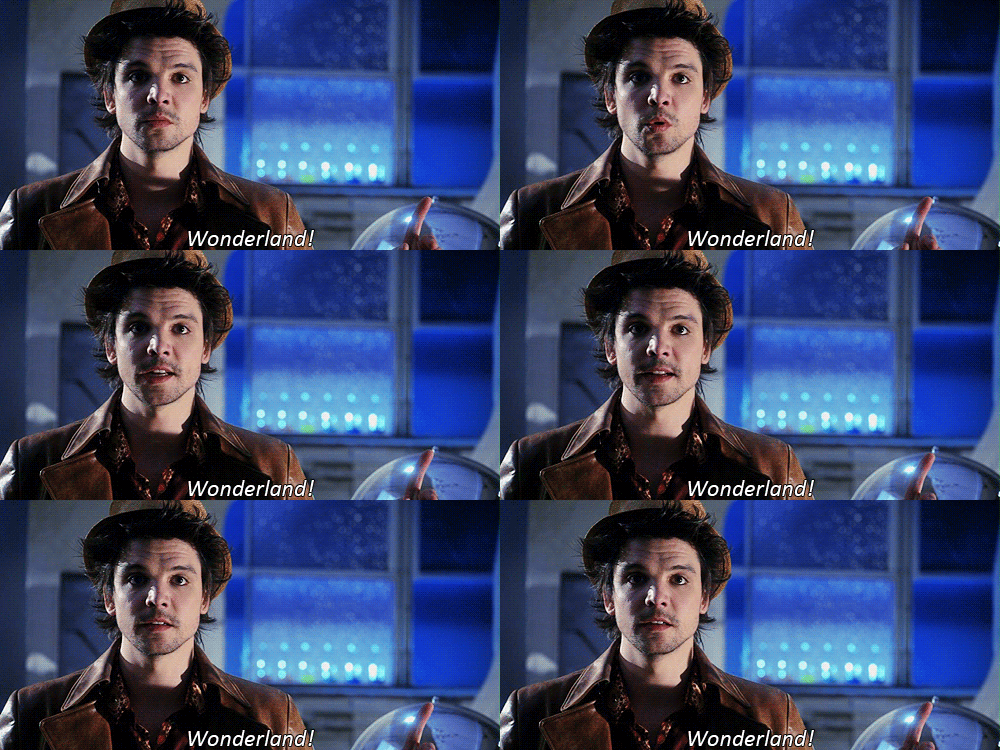
All Hail, Andrew-Lee Potts!


Dero Goi of Oomph! as the Mad Hatter
Fate of the Character


     The Mad Hatter still remains in Wonderland to this day.  He in the March Hare are forever trapped at 6:00 forever at Tea Party that will never end.

Thursday, August 22, 2013

5 Love Songs from the 90's that all guys secretly like

5 Love Songs From the 90’s That All Guys Secretly Like

By: Brian Cotnoir

     The 1990’s was a wonderful time for Music.  The Decade started off with the Seattle Grunge Scene and Alternative Rock and concluded on the other end of the spectrum with Boy Bands and pop acts like Britney Spears and Christina Aguilera.  Towards the latter end of the decade the radio airwaves were dominated with cheesy little pop ballads of Pop-Princesses singing about a crush or all five guys in a boy band—strangely enough—singing a song about the same girl.  This repetitive and unfeeling formula eventually killed the idea of love songs, not just for the 1990’s, but forever.  Now, most people associate Love Songs with artists like Adele, Coldplay, and crappy Emo bands, but artist of the 1990’s still did produce some awesome love songs that not only women enjoy, but so do lot of men, so this list is counting down the Top 5 Love Songs from the 90’s that All Guys secretly like.

5.) “Miss You Love” by Silverchair from Neon Ballroom (1998).

Silverchair was an Australian alternative rock band often described as “Nirvana in Pajamas” because the band started when the boys were only 14-years-old and their look and sound was heavily influenced by Nirvana.  By the time the band recorded their 3rd album in “Neon Ballroom” in 1998 the band had established itself as one of Australia’s Biggest Rock Acts.  A then 19-year-old Daniel Johns (the bands lead singer/guitarist) wrote a song for the album called “Miss You Love”.  The song is not a sappy love song, but actually a rather angry love song with lyrics such as “I love the way you love/but I hate the way I’m supposed to love you back” and “It’s gonna hurt/and I love the pain/a breeding ground for hate” this is clearly not a typical love song, and I think that’s what draws many guys to this song is because it’s not a sappy song about having your heart broken or falling in love.  Daniel Johns claims that he wrote the song during a bout with depression and that the song is about “not being able to establish a relationship with anyone, not being able to experience love outside the family”.  It is a great and powerful song that was written by a very young teenage musician and it still carries over today.


4.) “Glycerine” by Bush from Sixteen Stone (1995)

Does anyone know what the hell the band means by “Glycerine” because I still don’t?  This is a very simple song that features only one member of the band playing, singer/guitarist Gavin Rossdale. Many people consider this song to be the ultimate “Grunge Love Anthem”.  Bush had a lot of success in the 1990’s with “Glycerine” and other hits, but were resented by fans and music critics alike because—like the band Silverchair—they were accused of “sounding too much like Nirvana”.  Although, I do see a lot of similarities in their sounds, I feel like Bush is a great band.  What draws many guys to this song is the fact that it’s played on an heavily distorted electric, instead of an acoustic, and the lyrics don’t necessarily sound like it’s a love song.  It’d be one thing if the Gavin Rossdale chose a girls name for the title of this song, but instead he chose the word “Glycerine” and over ten years later he still has people scratching their heads going: “what’s that mean?”


#3- “I’ll Be” by Edwin McCain from Misguided Roses (1998)

Many people consider singer/songwriter Edwin McCain to be a one-hit wonder, but the truth is he’s actually not.  McCain’s career briefly sky-rocketed after this song appeared on an episode of the popular 1990’s sitcom “Dawson’s Creek”.  Since then “I’ll Be” has been a popular song covered on the hit reality show “American Idol” and is quite popular at most weddings.  McCain claims he wrote the song out of desperation, rather than being about him falling in love.  This song is very soulful and only people that have a vocal range similar or better than McCain should attempt to perform it live.  I’ve been fortunate to see Edwin McCain live and he is great.  His shows are very intimate (mostly all acoustic sets) and you can always bet that “I’ll Be” will always be a part of his set list.  Besides this one song McCain also has another popular hit “I could not ask for more” and a less popular track he recorded called “White Crosses”, which I think is actually one of his better songs and I have no idea how that track did not become a hit along with the other two songs that he wrote.


#2- “Wonderwall” by Oasis from (What’s the Story) Morning Glory? (1995)

Every guy who’s ever picked up an acoustic guitar for the first time has always aspired to achieve the same goal:  Learn how to play Oasis’s “Wonderwall” for a girl (or group of girls) in order to impress them.  This is not only one of Best and Most Popular songs performed by Oasis, but it is one of the most important and beloved songs of the 1990’s and probably of All-Time.  Despite, many pre-conceived misconceptions, Noel Gallagher did not write this song about a woman.  I mean, he did say he did when the song was first released, but that was only at the recommendation of record executives who believed that story would help boost the popularity of the song.  The truth about the songs title comes from former Beatle, George Harrison’s, first solo album “Wonderwall Music”.  Another fun fact was that Noel Gallagher (the bands lead guitarist and primary song writer) gave his brother Liam (the bands vocalist) the option of singing either “Wonderwall” or “Don’t Look back in Anger” on the album.  Liam—wisely—opted for “Wonderwall” and Noel sang “Don’t Look back in Anger” on the album instead.  Everybody likes this song, not just women, but guys too—and more specifically looking to impress women.  Thanks to Oasis massive hit we are doomed to hear it played in High School Talent Shows and College Campuses by a bunch of hacks with guitars who are just hoping to get lucky.


The Most Pretentious Music Video I've ever seen

1.)    Anything by the Goo Goo Dolls


In the 1990’s The Goo Goo Dolls were a big deal.  They were one of the most popular bands of the 1990’s.  The Goo Goo Dolls blew up after the success of their single “Iris” which appeared in the soundtrack to the 1998 film “City of Angels”.  “Iris” wasn’t the only successful song that The Goo Goo Dolls had, there was also “Slide”, “Black Balloon”, and “Name” (which appeared on their previous album A Boy Named Goo in 1995).  The majority of The Goo Goo Dolls hit songs in the 1990’s were featured on their sixth studio album Dizzy Up the Girl and were mostly love songs written by the bands singer/guitarist John Rzeznik.  The Goo Goo Dolls are still one of the most popular bands from the 1990’s and many guys enjoy playing/performing their songs on guitar and karaoke, and most of them don’t care that when they sing a song like “Name”, “Slide” or “Iris” that they are singing a love song, because they just think that the song sounds awesome and they look awesome singing/playing it. 


This is a Good Track


This one too!


And You cant forget about this one; This is my favorite version of the song

Wednesday, August 14, 2013

Character Analysis: Rhoda Penmark

Character Analysis: Rhoda Penmark

By: Brian Cotnoir

    One of the most famous Classic Horror films of All-Time has to be Mervyn LeRoy’s “The Bad Seed”.  The film was based off a stage play written by Maxwell Anderson, which was based off of the 1954 novel-of-the-same-name written by William March.  It’s the story of a mother, Christine, who begins to notice that her young daughter may not be as perfect or as innocent as she seems.  She begins to notice that her daughter has a bit of a mean streak, and is not all that phased by the macabre.  Christine has done all that she can to be a caring and loving mother and raise a polite and well-mannered daughter, but maybe there’s something in her genetics that makes her a natural Bad Seed.

CHARACTER: Rhoda Penmark from “The Bad Seed” (1956).

Looks can be deceiving
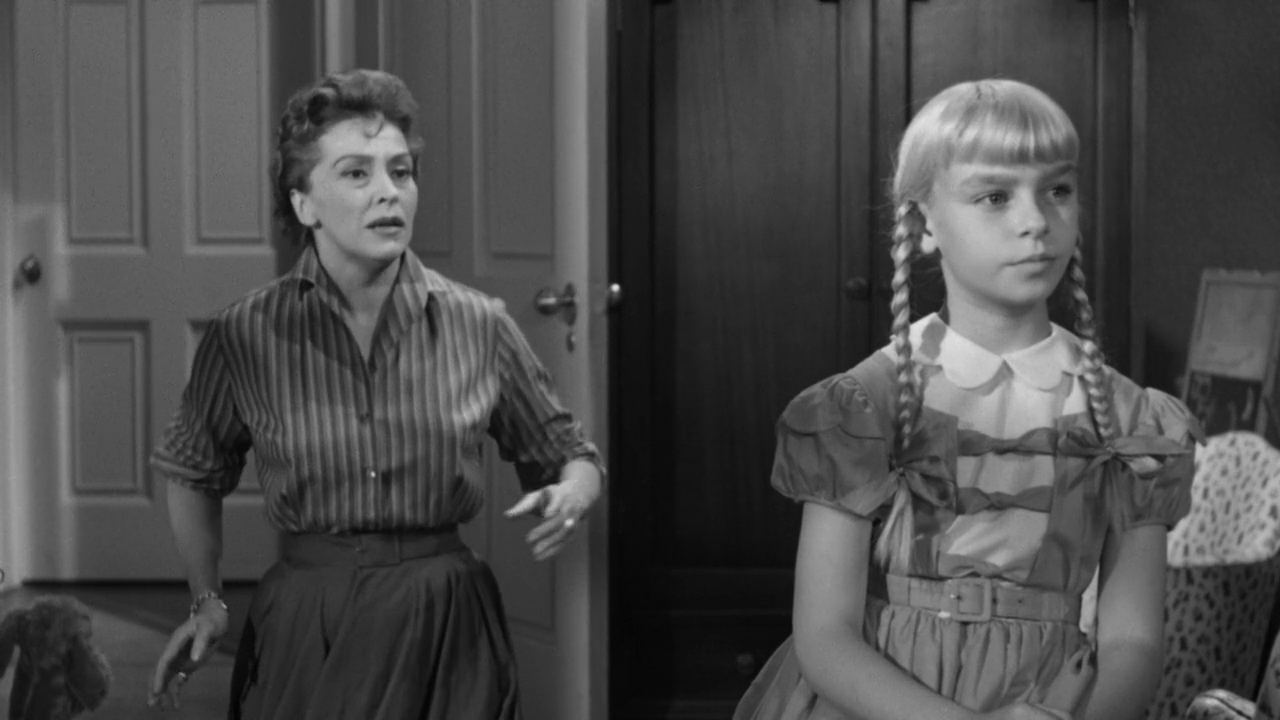
Rhoda is a young girl (probably no older than 9 or 10) and she comes from a loving family.  Her father is a Military Officer and her mother is a stay-at-home mom.  Rhoda is very close to her mother.  They share a very special bond that only a mother and daughter could have.  Her mother Christine does all she can to make sure that her daughter is polite, well-groomed, respectful, and educated.  Her daughter Rhoda is all of those things on the outside, but on the inside she is a striving perfectionist, manipulative, and driven.  When Rhoda loses a Penmanship Award to one of her classmates she is inconsolable.  She feels that the award should have gone to her and that she was wronged.  Rhoda ends up killing her classmate, Claude, and managed to get away with it.  Rhoda’s mother eventually discovers the penmanship award in her daughter’s bedroom, and after grilling her for a bit Rhoda eventually confesses to her mother she did murder her classmate. Not only that, but she also admits to killing a neighbor back when they lived in Wichita.           
Don't try to protect her, Mother.   She knows what to do...
Rhoda’s mother is in disbelief that her young daughter could have committed these murders, and it is later revealed that Christine’s mother (Rhoda’s maternal Grandmother) was actually a serial killer, and was found guilty and executed in the electric chair for her crimes.  Christine was two-years-old when this happened, and was later adopted by a new family.  Despite the fact that Christine has tried to so hard to raise her daughter in a loving and supportive environment, her daughter’s sociopathic tendencies may be genetic.  Like I said, Rhoda is driven character, and she will do whatever she can to make sure she gets here way and more importantly she will make sure that she get away with it.  

THE ACTRESS:

She'll send chills through your body
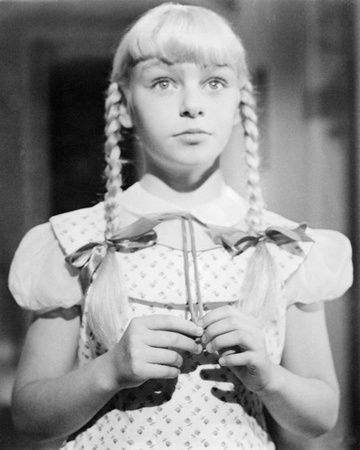
    The role of Rhoda is played by Patty McCormack.  I think Patty McCormack did wonderful job in this role.  This was not an  easy role for the time.  I haven’t done a ton of research on this yet, but I do believe that this was the first Horror film in which the villain (or antagonist) was a child.  I have not found any other films made before “The Bad Seed” in which a child commits murder.  So yeah, this was a monumental role.  I kind of feel like Patty McCormack was in the same boat as Anthony Perkins when he took the role as Norman Bates in “Psycho”.  Back then this idea of a child committing multiple murders was an unheard of and even an unthinkable notion.  This is the grandmother of the scary children in horror films, and in all honesty you could not have a better actress then Patty McCormack to play this role.

CHARACTER IS SIMILAR TO OR INSPIRED BY:

     Like I said, I could not find any other films before “The Bad Seed” where a child was the villain, but I definitely feel that having being made into a stage play and a novel before the film was made that it definitely gave Rhoda a lot of time to develop as a character.  Rhoda was a character who was the first of her kind, and every other child villain in horror films, your Damien’s and your Malachite’s, owe everything to Patty McCormack’s portrayal of Rhoda in “The Bad Seed”.  
A Fat, Animated equivalent of Rhoda
However, there is one modern day character that I feel perfectly embodies everything that Rhoda was in “The Bad Seed” and that is Cartman from “South Park”.  I was a huge fan of “South Park” long before I ever saw “The Bad Seed” and as I was watching the film for the first time, I kept laughing to myself and saying “Holy Crap, this is where they drew the inspiration for Cartman”.  Like Rhoda, Eric Cartman acts a sweet and innocent around his mother in his attempts to manipulate her and get whatever he wants, but deep down he is a sociopath who is prone to violent temper tantrums.  Cartman is the male equivalent of Rhoda 100%.

FATE OF THE CHARACTER:


     So the fate of Rhoda in the film differs from her fate in the novel and the stage play.  In both the novel and the stage play, Rhoda’s mother gives her a bottle of sleeping pills before taking her own life.  Rhoda ends up surviving her mother’s attempt at infanticide, and will go on to live and—presumably—kill again.  However, when this film was made in 1956, all film studios had to follow a strict code on what they could and could not show in films.  One of the things filmmakers weren’t allowed to have in their films was showing the villain get away with their crimes.  The Hays Code stated that “Crime doesn’t pay” so the ending had to be altered.                                    
Go And Get what you deserve!
   In the film version, it ends with Christine surviving her suicide attempt while Rhoda goes out during a lightning storm in hopes of retrieving the Penmanship Award that her mother tossed into the lake, to help cover up her daughters crime.  While searching for the award, Rhoda is struck by a bolt of lightning and killed instantly.  I can’t say for sure as to which ending I prefer.  To be perfectly honest, I think that if the film was allowed to keep its original ending that I would have been just as satisfied.  I will say this though to those of you have not seen “The Bad Seed” yet.  When you watch it make sure you watch until the very end of the credits.  It’s for your own good, I swear J.

Friday, July 5, 2013

5 Under appreciated films that feature the acting talents of Edward Norton

NERD NOSTALGIA: 5 Under Appreciated Films that feature the acting talents of Edward Norton.

By: Brian Cotnoir

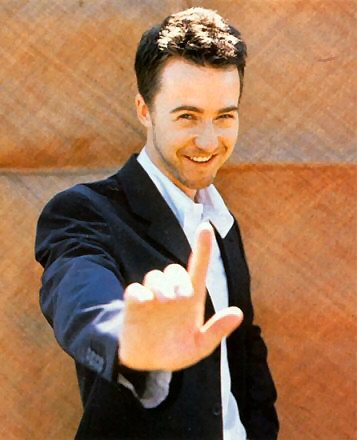
It’s no secret to anyone who knows me personally that I am a huge fan of Actor Edward Norton.  Ever since I first saw  “American History X” during my senior year of high school I have grown to admire Edward Norton as an actor.  Even if you don’t recognize the name, most people know him as The Narrator/“The Other Guy in Fight Club”...the one that isn’t Brad Pitt.  Besides “Fight Club,  Norton has received a lot of great praise for his roles in films such as “American History X”, “The Incredible Hulk”, “The Illusionist” and “The People vs. Larry Flynt”.  However, Edward Norton has also been featured in a lot of other great films that not many people know about.  So this week’s review is going to serve two purposes: 1.) Pay Homage to his awesomness Edward Norton and 2.) Expose you to some of Norton’s lesser known works.

5.)-”Kingdom of Heaven”

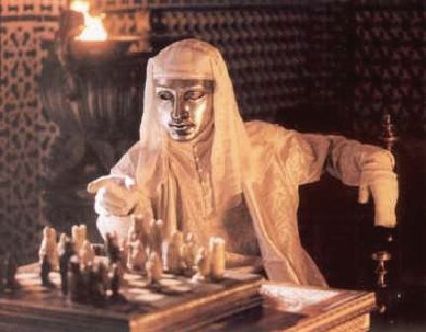
Yep, That's Edward Norton
     Not many people know that Edward Norton was in this film and there’s a very good reason why: his character wears a mask the entire film.  The film itself it’s pretty long and it the tale of a blacksmith—played by Orlando Bloom—and he leaves France to help a Christian Army reclaim the city of Jerusalem.  Edward Norton’s character is named “Baldwin IV”, and as I said his character wears a mask because he is a leper.  I actually saw this film for the first time on TV, and as I was watching it I began to say to myself, “hey, that guy in the mask sounds a lot like Edward Norton”; one trip to IMDB later, and my suspicions were confirmed.  This film doesn’t have a lot of action in it, but it does feature other great actors, like Liam Neeson, and also early on in the film they show one the coolest way that I have ever seen a person killed in a film, so you’re definitely going to want check out “Kingdom of Heaven”.

4.)- “Death to Smoochy”

It's so funny!
I have no idea why so many people hate this movie.  It has a great story, an all-star cast, and it’s just so freaking hilarious to see Edward Norton dressed up as a big purple rhino.  Edward Norton’s character is the overly-sensitive vegetarian loser who writes politically correct songs for a children’s show for a character he created called “Smoochy the Rhino”.  Robin William’s plays a washed up children’s TV show actor who lost his show to Norton because it was discovered that he was taking bribes from kids parents so that they could be on the show.  I’ll be perfectly honest: I think Robin William’s is very annoying and only about 5% of the movies I’ve seen him in are actually good, but d@mn it he is so hilarious in this movie.  He’s so crazy and neurotic in her pursuit to ruin Edward Norton’s character’s show that you can’t help but laugh.  I don’t care what anyone says; this is a funny movie and this is an awesome movie!

Now that's some quality children's entertainment

3.)- “Keeping the Faith”

Norton be praised!
     Edward Norton stars and makes his directorial debut in the 2000 Comedy “Keeping the Faith”.  It’s the story of two friends a Catholic Priest (Edward Norton) and a Rabbi (Ben Stiller) who learn that their old friend Anna (Jenna Elfman) has come back to New York City.  Both friends have always secretly had a crush on Anna, but neither of them every told the other. Now both friends and men of faith are out to win the heart of their old friend.  This film just has a ridiculous premise and that’s why it’s so great.  Edward Norton’s character is a Catholic Priest, so already he took a vow of celibacy, and yet he still yearns to be with this woman, and Ben Stiller is just hilarious as the Rabbi Jacob Shram.  I have no idea why Edward Norton and Ben Stiller haven’t collaborated together on other films because they both work together so well!  This is a good comedy, and has laughs, drama, romance, and all other sorts of good things in it.  You should probably check it out.

2.)- “Leaves of Grass”

Edward Norton meet Edward Norton
This is definitely one of Edward Norton’s lesser known films.  This film got a limited release in theatres back in 2008, and what I like the most about it is that Edward Norton plays two roles...actually he’s playing twin brothers in this film.  One character he plays, Billy, is an Ivy League Philosophy Professor who leaves his home in Oklahoma and goes to the East coast.  Billy’s Twin brother, Brady, is a small time drug dealer who claims to grow the best marijuana in the state of Oklahoma.  Brady gets into some big trouble when he can’t pay a debt back to a local drug lord, and has to fake his own death to get his brother to come back to Oklahoma to help him out.  This film is just awesome and really funny.  It features other big name stars like Richard Dreyfus and Susan Sarandon, and it’s just so cool to see Edward Norton play two characters on screen at the same time.

My Favorite Scene in the film

It's just funny to watch Edward Norton talk to himself

1.)- “Primal Fear”

     Edward Norton’s first film is also probably his best acting performance.  This film earned Edward Norton a Golden Globe award and a Oscar nomination for Best Supporting Actor (which he wrongly went to Cuba Gooding, Jr. for Jerry Magurie).  The film is based off of a novel written by William Diehl, “Primal Fear” tells the story of a Chicago attorney named Martin Vail, played by Richard Gere, who defends a young altar boy accused of viciously murdering a beloved archbishop.  As it turns out the attorney chosen to prosecute the case is Vail’s ex-lover.  What follows next is a roller coaster ride of passion, determination, and exposed secrets.         
Just look at that fresh young face
Edward Norton, plays Aaron Stampler, a young altar boy accused of the arch bishop’s murder.  Stampler claims he was in the room when the archbishop was murdered, but that it was an unknown third party who committed the murder.  His attorney, Mr. Vail, tries to exploit the possibility that Aaron possibly suffers from “multiple personality disorder” and that it was his other personality “Roy” who committed the murder.  Norton does a great job playing the young Aaron Stampler and his rogue bad-ass alternate personality, Roy.  
    I will admit the first time I saw “Primal Fear” I was zoning in and out of the film.  In particular the parts of the film that focus on Martin Vail’s investigation.  However, I was totally blown away by the twist-ending at the end of the film.  In my personal opinion it is the best twist/surprise endings in cinema history.  Primal Fear is an ideal film for those who have interests in law, mystery, and crime-drama’s and I think people who see it will really enjoy it.

Meet Aaron

Meet Roy

Friday, June 28, 2013

Character Analysis: Agatha Prenderghast

Character Analysis: Agatha Prenderghast

By: Brian Cotnoir

I really enjoy the tagline on the poster
During October of 2012 there were three Halloween films out in theatres that were largely marketed towards children.  They were “Frankenweenie”, “Hotel Transylvania”, and “ParaNorman”, of these three films that were released in theatres, I thought for sure that “ParaNorman” was probably going to be the worst of the three, but much to my surprise/delight I actually enjoyed “ParaNorman” and I think that it was the best of the three films that came out in October of last year.  “ParaNorman” was also probably the most adult of the three films.  “Hotel Transylvania” is definitely a kid’s movie.  Tim Burton may have directed “Frankenweenie” and has made some other creepy films in the past, but it was still a film released by Disney, so they managed to keep the creepy/scary factor down to a minimum, but “ParaNorman” goes to some dark places in this film.  I wouldn’t recommend this film to parents who have kids under 12-years-old because I don’t think a lot of younger kids could handle some of the content and images in the film.  It’s still a great film and to be perfectly honest it has one of my new favorite film characters: Agatha “Aggie” Prenderghast.

CHARACTER: Agatha “Aggie” Prenderghast from “ParaNorman” (2012)

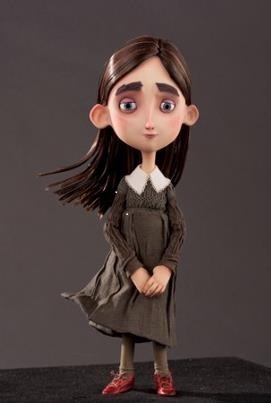
Agatha "Aggie" Prenderghast
     Agatha Prenderghast appears in the Halloween stop-motion film “ParaNorman”.  Agatha was a Puritan girl who lived in the town of Blithe Hollow, Massachusetts in the 1700’s.  She was accused of being a witch by the oppressive religious zealots in her town and was found guilty of witchcraft and sentenced to death.  The town now celebrates their most infamous resident every Halloween by having an annual festival, selling merchandise, and putting on a stage play about the trial of Agatha Prenderghast.  There’s even a statute of Agatha in the town square, where she is shown as being a mean, old, ugly witch.  The only thing is that Agatha was not an old, ugly, witch; she was just a little girl who was no more than 10 or 11, and the town’s residents still condemned her to die.  Agatha was actually a “spiritual medium”, but since she lived in a time in a town run by Puritanical Tyrants, she was killed for being different, and that sad, pitiful little girl turned into an angry vengeful monster that would use her powers to go on a violent tantrum every year and exact her vengeance on the town for what they did to her centuries ago.              
           
THE ACTRESS

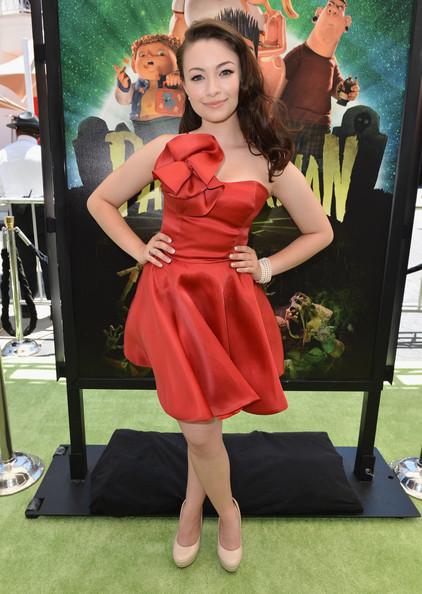
Jodelle Ferland at the Premier 
One thing I really liked about Aggie was that when I first saw her on screen I was immediately reminded of Alessa Gillespie from 2004 film “Silent Hill”, and then I was even more pleasantly surprised to learn that Aggie was voiced by Jodelle Ferland, who played Alessa in “Silent Hill”.  Honestly, they could not have gotten a better voice actress for this role than Jodelle Ferland.  I know a lot of people think that she get’s “type-casted” into these types of roles, but come on people, she’s really good at what she does.  I mean sure sometimes she does strike out with this type of role in films like “Case 39” and “Twilight Saga: Eclipse”, but she also does great in this role in films like “ParaNorman”, “Silent Hill” and “Cabin in the Woods” so who cares if she gets type-casted into these type of Horror roles?  Do we like Jason Statham and Chuck Norris any less for being “type-casted” as Bad-a$$es in films?  What about Jason Mewes?  Does it bother you that he always has to play some stoner in a Kevin Smith film?  I say if you’re good at one type of role and people enjoy you doing it then you know what, keep it up.

CHARACTER IS INSPIRED BY OR SIMILAR TO:

     Agatha and the town were obviously inspired by the 19 victims of the Salem Witch Trials of 1692.  The town of Blithe Hollow, Massachusetts is clearly inspired by the actual town of Salem, Massachusetts.  Though, the History Major in me feels that I must rightfully inform you that the actual Salem Witch Trials happened in Salem Village, which now present day Danvers, Massachusetts.  I grew up in Massachusetts, and actually went into Salem on Halloween a few times with my friends and it is definitely the biggest and best Halloween party you will ever go to, the whole town get’s in on it, like the residents of Blithe Hollow in “ParaNorman.                                       
I thought I saw Jodelle Ferland in
this type of role somewhere before
     I also believe that what actress Jodelle Ferland brought to the role was the same type of acting she used in “Silent Hill” for Alessa.  I know a lot of people don’t like the film adaptation of “Silent Hill”, but for me personally it’s one of my favorite Horror films, and if you watch Jodelle Ferland in “Silent Hill” and then watch “ParaNorman” you will see that their characters are almost exactly identical.  Both characters were outcasts living in small towns that were run by Christian Fundamentalists.  They were both taken away from their mothers at a young age and were killed by the Christian Fundamentalists and have now turned into violent and hateful beings with lust for vengeance from beyond the grave.  Seriously, people they are the exact same character played by the exact same actress!  I am not surprised that the studio would want Jodelle Ferland to voice Agatha Prenderghast because she’s really that good of an actress who can still succeed by doing the same role.

FATE OF THE CHARACTER:

"Angry Aggie" decides to change 
When Agatha’s ghost meets Norman, the films protagonist, she is reluctant to end her torment of the town, but Norman is persistent and tells Agatha she has every right to be angry with the town, and that he knows what it feels like to be an outcast, and explains to her how she is accomplishing nothing by destroying the town out of hate.  Norman persuades Agatha to stop by reminding her of happier times in her life with her mother.  Now that Agatha has found peace she can finally move on to the afterlife.

Saturday, June 22, 2013

Character Analysis: Hydell

Character Analysis: Hydell

By: Brian Cotnoir

     This is something, I’ve been wanting to try for a while, but I didn’t know exactly how I wanted to do it, so please bare with me as I try to develop and improve upon this idea of mine. What my “Character Analysis” is going to be is, I will be look at a character in a film and I will be writing an in depth analysis on what I thought of the character, what are their strengths and weaknesses, whether I thought the role could have been played by a better actor, etc.  Sometimes I’ll do a character who appears in only one film, other times I’ll pick a character that appears in multiple films/franchises, sometimes I’ll review a main character in a film, and other times I will review a support character, and I even hope to do comparing and contrasting characters in films that have been remade.  I hope you all like this, and without further delay he is my first Character Analysis.

CHARACTER: Hydell from “Lockout” (2012)

Hydell is a character who appears in French director, Luc Besson’s 2012 Sci-Fi Action “Lockout”.  Hydell is a prisoner aboard MS-1; a prison in space that orbit’s the earth.  All prisoners on MS-1 spend the duration of their prison sentences in a preservation tube in a stasis (or deep sleep).  Emilie Waronick—who is the daughter of the President of the United States—travels up to MS-1 as part of humanitarian mission.  She is there to interview some of the prisoners, and check on their well-being because there are rumors going around that the prisoners aboard MS-1 are actually being used as human guinea pigs to test the physical and psychological effects of deep space exploration on MS-1.  Hydell is the first (and actually only) prisoner Emilie get’s to interview.                         
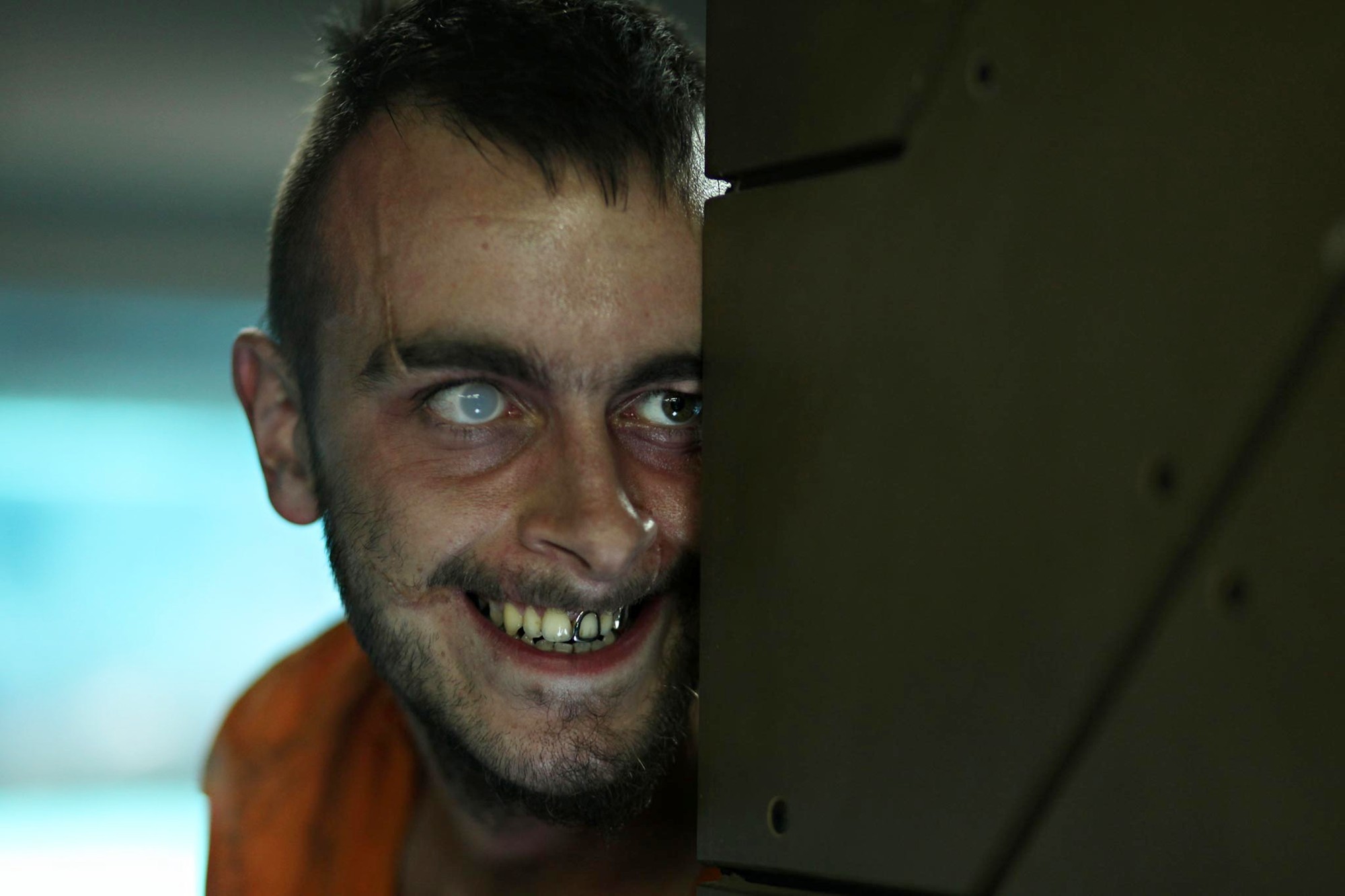
A very neurotic character indeed
     From the first time we see Hydell he comes off as very hostile and appears to be a very agitated, and neurotic.  Hydell was sent to MS-1 after being convicted of 53 counts of “aggravated physical assault”, which he laughs off and claims that it “was a case of mistaken identity”.  He is a very sarcastic person, and displays an immature, almost child-like, behavior throughout the film.  A few examples are, ignoring his older brother and doing what he pleases, throwing a temper tantrum when he doesn’t get his way, breaking things because he gets frustrated or understand how they work, taunting other people who he has put in a helpless situation, and never considering the consequences to any of his actions.    
Hydell has an older brother named Alex, who is also on MS-1.  Alex is just the opposite of his younger brother, he is well spoken, he thinks before he acts, and displays strong leadership.  This brings up the question: did Hydell, possibly, suffer some brain damage as an effect of his stasis?  We are shown other prisoners in the film that have suffered some severe mental trauma after being awoken from their stasis (everything from brain damage the dementia).  Or is there the possibility that Hydell, was just following in his brothers footsteps and that’s how he became a criminal.  Hydell, doesn’t seem to care much for his brother Alex.  Alex tries to keep Hydell in line and orders him around, but he almost never listens.  Towards the end of the film, Hydell loses his temper and stabs Alex after he scolds and embarrasses him.  As his brother lies their dying Hydell shouts out; “Mommy, says you talk too much!”.  Even though we never see or hear from her in the film, I think this implies that Hydell may have had a close relationship to his mother, and may be suffering from some sort of Oedipus Complex and that’s why he may have turned out as a rapist.

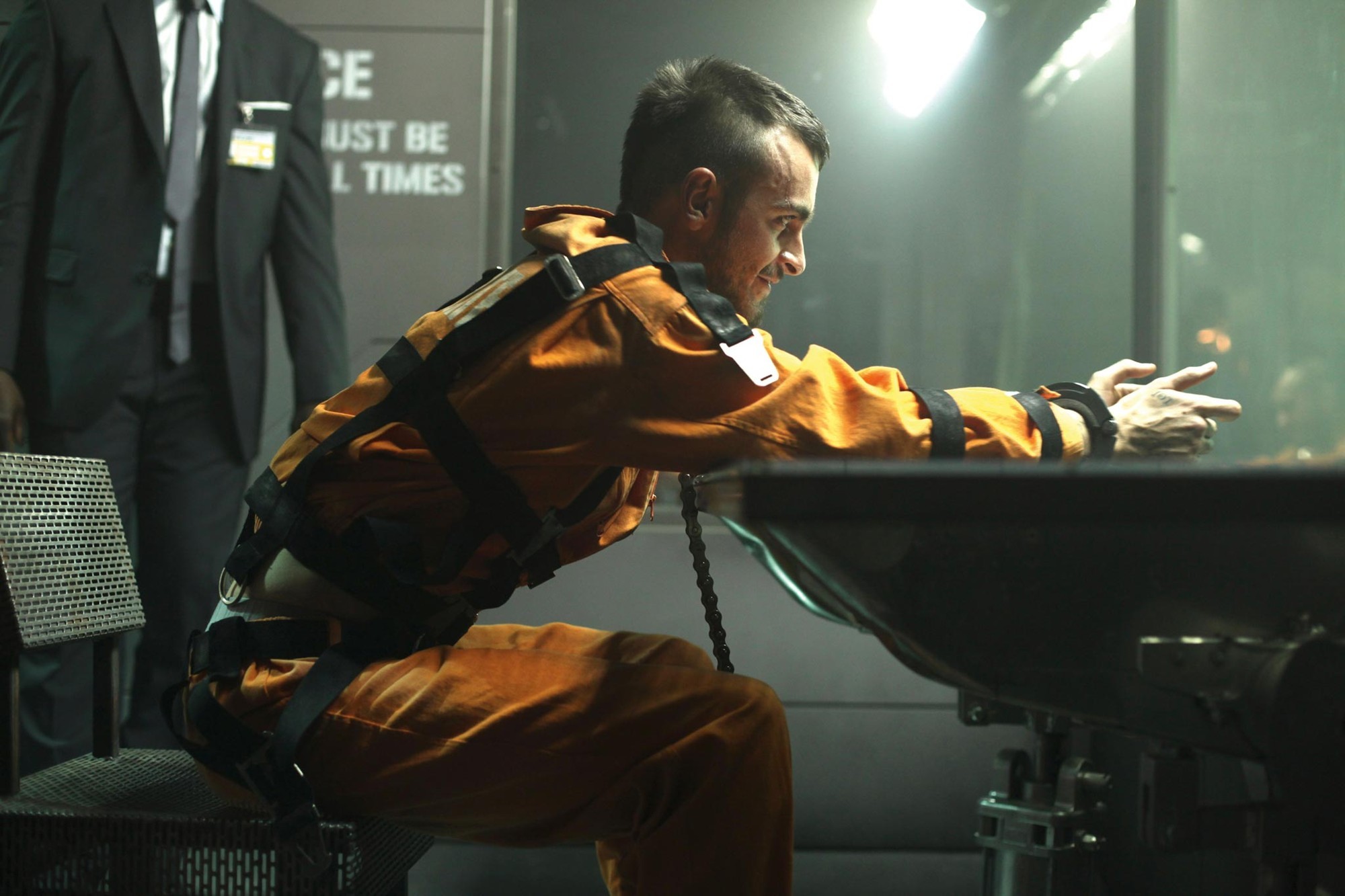
This is what happens when you leave the sociopath alone

THE ACTOR

Joseph Gilgun, a promising and up-and-coming actor
     Hydell is played by a lesser-known actor that I actually have great admiration for named Joseph Gilgun.  I first saw Joseph Gilgun in the film “This is England” about 5 years ago, and I really enjoyed his performance as the likable skinhead leader Woody.  One thing I really like about Joseph Gilgun is his voice.  I think he has the coolest accent ever, and if there was a surgery around where they could change the sound of your voice, I would have this surgery to make myself sound like Joseph Gilgun.  I first saw a trailer for this film in a movie theatre, and I thought it was just going to be some lousy Sci-Fi action film that I would never see, and that’s when I heard one of the characters in the trailer say the line “Well, I’m gonna dream about you.  Aren’t I?” and I recognized that voice right away and started geeking out in my seat, because I was so excited that Joseph Gilgun was going to be in a film that was going to get a wide release in the U.S.  I was with my dear friend and colleague, the Corseted Critic, when I saw this trailer for the first time, and she saw how I excited I was; she actually went with me to see the movie the day it was released AND she paid for my ticket because she’s awesome like that. I enjoyed every second I saw Joseph Gilgun on screen in this film, and yeah this film is definitely a guilty pleasure for me.  

CHARACTER IS INSPIRED BY OR SIMILAR TO:

     Hydell wasn’t really inspired by or similar to any characters that I can think of in any other films.  Though, I will say that I thought Hydell was somewhat similar to a character Joseph Gilgun played in another film.  I definitely saw some subtle similarities between Gilgun’s Hydell and the character, Kenny, who he played in British Crime Drama, “Harry Brown”.  I think that Gilgun definitely brought some of his acting tricks from playing Kenny in “Harry Brown” and used them to influence how he portrayed Hydell.

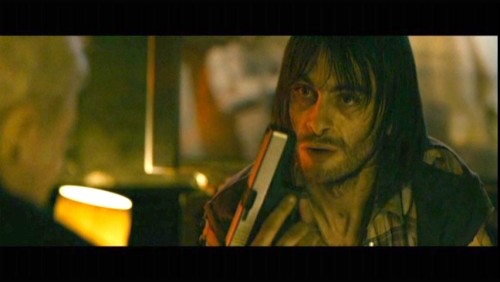
Joseph Gilgun as Kenneth in "Harry Brown" (2010)
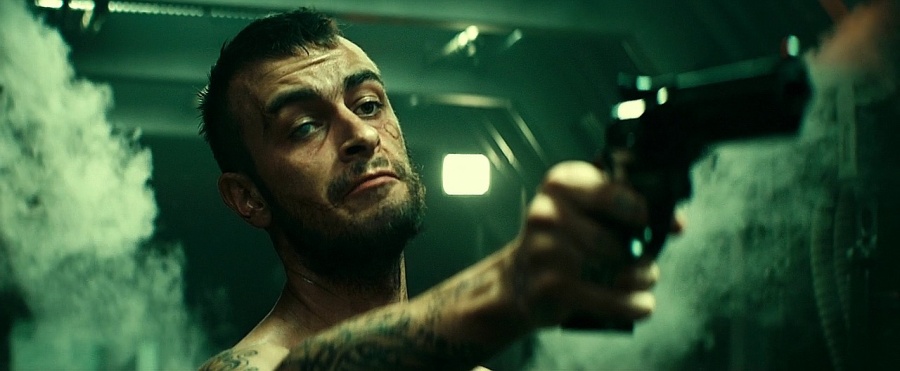
Joseph Gilgun as Hydell in "Lockout" (2012)
FATE OF THE CHARACTER:

Hydell ultimately damned everyone on MS-1 when he managed to escape.  Right, after he managed to escape, he held a gun to a workers head and ordered him to release all the other prisoners.  The worker opens the other stasis tubes and is shot in the head after he followed his demands. Hydell just wants Emilie.  He cares nothing about the lives of the other prisoners or the other hostages, he just wants Emilie.  Emilie is the only person that they’re really trying to rescue.  Hydell, grows impatient after he fails to find where she is, and he kills every other hostage on MS-1.  Emilie and Agent Snow (played by Guy Pearce) are the only people who manage to escape MS-1 alive before the government sends in the “Space Marines” to blow up MS-1 and kill everyone on board.


Saturday, June 15, 2013

Artist You Should Know: What is Queercore?

AYSK: What is Queercore?

By: Brian Cotnoir

    I’ve been a huge fan of Hardcore Punk since I was in high school.  I liked the brutal pounding instruments, I related to the anti-social, nihilistic lyrics, and I smiled as I crashed into dozens of likeminded people in mosh pits at shows.  Punk rock has many different subgenres such as Hardcore, Straight Edge, Oi!, Punk-Pop, Riot Grrrrl, and Celtic punk, but one subgenre of Punk rock that I did know existed until I was in college is queercore.  What is queercore?  Well Queercore is basically, Punk Rock music with lyrical contact that typically relates to sexual/gender identity.  A lot of queercore bands have songs about the struggles of gay and lesbian community or songs that are empowering to members of the gay and lesbian community.  Many members of queercore bands are gay and lesbian, but (to my knowledge) it’s not a requirement to be either gay or lesbian to be in a queercore band.  Some people claim queercore is music for gay men, and that Riot Grrrrl is the “lesbian equivalent”, but that’s not true.  Many Riot Grrrrl Bands are not lesbians, and to say that Queercore and Riot Grrrrlll are two sides to the same coin is a false statement, they are two different and respectable subgenres of Punk.                         

"Youth of ToGay"  This is Queercore...

"L-7".  This is Riot Grrrlll...Know the difference

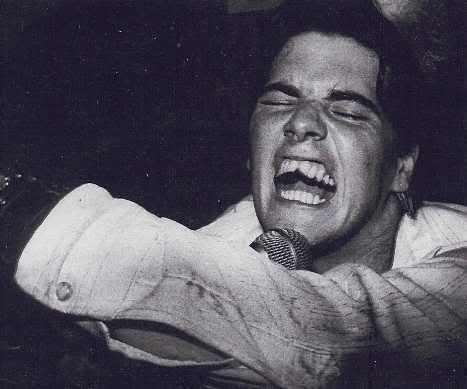
Yes, He was Gay!  So What?!
     The Queercore movement began in the mid 1980’s.  Some queercore bands that emerged from the timeframe were Pansy Division, from San Francisco, and Limp Wrist from Chicago.  Now, I’ve heard from some people who are avid listeners of hardcore music that “gays don’t belong in the hardcore music scene”, but I couldn’t disagree with that statement enough.  To me Hardcore and Punk rock was music for the angry and alienated youth.  If there’s any group that knows what it’s like to be alienated it’s definitely the Gay & Lesbian community.  Darby Crash—founding member and lead singer of the punk legends “The Germs”—was a homosexual, and he is still highly regarded as one of the godfathers of early punk rock and is still respected a legend of the scene.  Just because he was gay didn’t mean that he couldn’t be “brutal” or put on a hard show.  A lot of people still listen to Darby Crash and The Germs and admire their contribution to the Punk rock scene of the late 1970’s.              
    Queercore is proof that there is a place for Gays & Lesbians in Punk rock, and that not all musicians who are gay have to sound or play like a Elton John, Freddie Mercury, George Michael, or Melissa Ethridge, and I’m actually surprised that there aren’t more fans of this style of music today.

Pansy Division's Gay-Friendly version of Nirvana's "Smell's Like Teen Spirit"